
A PVC dump bin display should make products easy to browse without creating a difficult job for store staff. An attractive exterior is only one part of that decision: the packaging, internal support, assembly method and replenishment routine must work together. This guide explains how to specify an open-top display made from PVC foam board, with practical checks before you approve a sample or request production quotes.
Table of Contents
- Which Products Fit a Retail Dump Bin Display?
- Specify the PVC Foam Board Dump Bin
- Plan the Dump Bin Display Design Around the Store
- Confirm PVC Dump Bin Display Load Capacity
- Make Dump Bin Display Assembly Practical for Stores
- Protect the Display During Shipping
- Plan Replenishment and Low-Stock Access
- What to Specify in a Custom PVC Dump Bin Display RFQ
- Frequently Asked Questions
- Final Thoughts
Which Products Fit a Retail Dump Bin Display?
The best products for retail dump bin displays have packaging that tolerates contact and stays identifiable when loosely arranged. Sealed accessory packs, durable small cartons and packaged promotional items are possible candidates, but assess your actual packs rather than assuming an entire product category is suitable.
Use these checks to decide whether an open bin is appropriate:
- Crushing and rubbing: Inspect packaging after placing the intended stock together.
- Label visibility: Check whether shoppers can identify packs that turn sideways.
- Tangling or leakage: Choose another presentation if products can damage neighboring packs.
Place real packs together and remove several as a shopper would. If the remaining stock becomes difficult to recognize or retrieve, additional capacity will not solve the presentation problem.
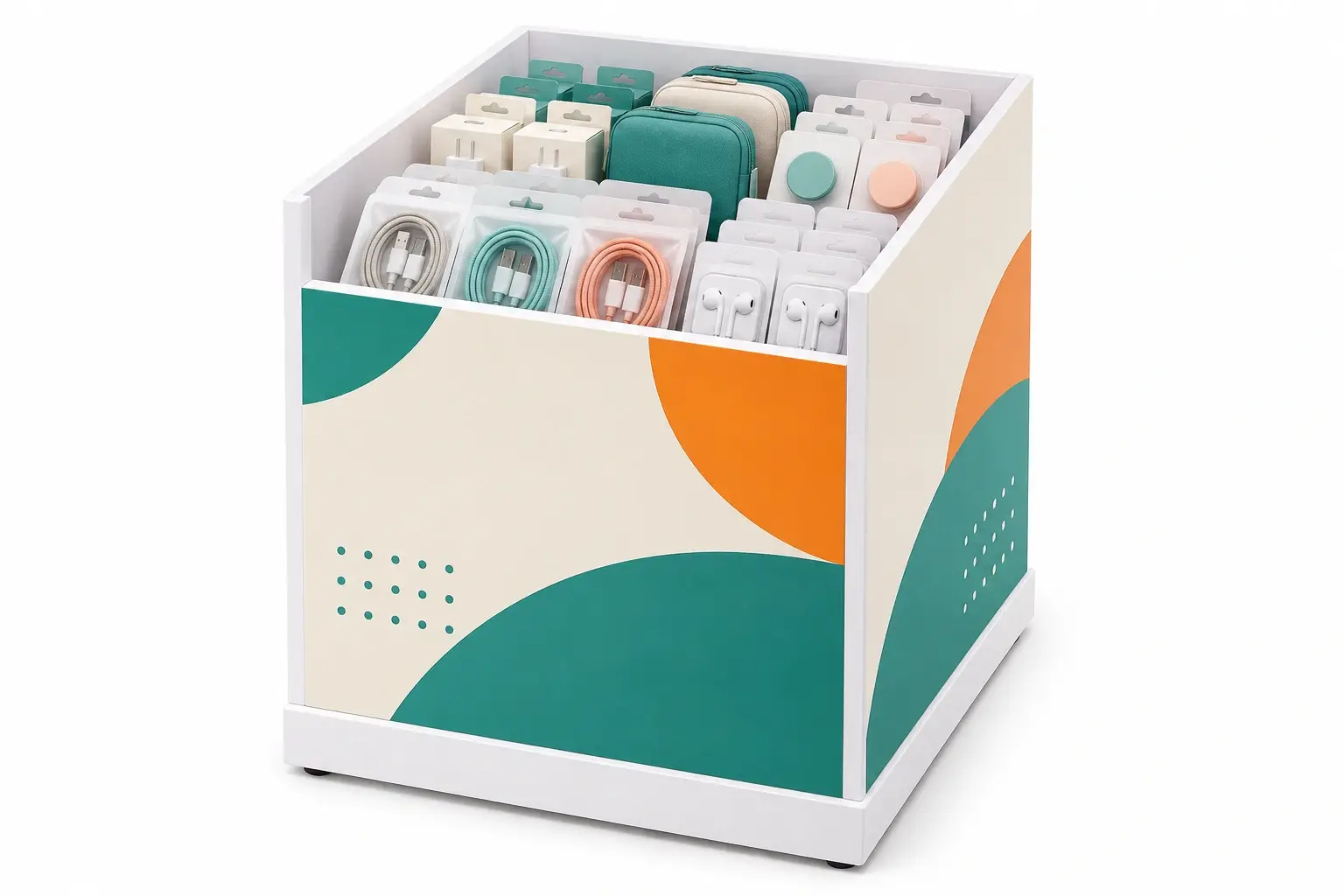
Compare common POP display types if your products need individual facings, hanging support or separation. Do not force unsuitable merchandise into a bin simply because it offers more apparent capacity.
Specify the PVC Foam Board Dump Bin
Write “PVC foam board” in the specification, rather than simply “foam board.” It is not paper-faced foam board, corrugated cardboard or transparent acrylic; advice for those materials cannot automatically be transferred to this structure.
Request the proposed grade, thickness and surface finish. Palram’s PALIGHT material information identifies foam PVC products for printing, fabrication and retail displays, but does not establish the capacity of your finished bin.

Record the approved material specification with the drawing revision. Do not choose every component by thickness alone or accept an unnamed substitute because its color and surface look similar. Our PVC foam board thickness guide explains the material considerations behind that decision.
Plan the Dump Bin Display Design Around the Store
Choose the Footprint, Opening and Fill Depth
Measure the approved retail position before developing artwork. Include the complete footprint, header projection, access for shoppers and space staff need to replenish stock.
Agree on dimensions and units with the retailer; there is no single footprint suitable for every US or European store. Check the opening using the largest pack and test retrieval without reaching over sharp or obstructive edges.
Request both external dimensions and usable internal dimensions on the drawing. Two bins with the same footprint can provide different merchandising space once wall thickness, supports and dividers are included; compare the actual usable opening rather than the outer silhouette.
Identify What Supports the Merchandise
Ask for a drawing identifying the outer panels, internal platform, base and connections. The branded enclosure does not necessarily carry the merchandise: establish how the load passes from the platform to its supports and the floor.
If the proposal uses another material for reinforcement, have it named. Decorative outer panels and load-bearing components should be identified separately so that a graphic change does not accidentally alter the supporting structure.
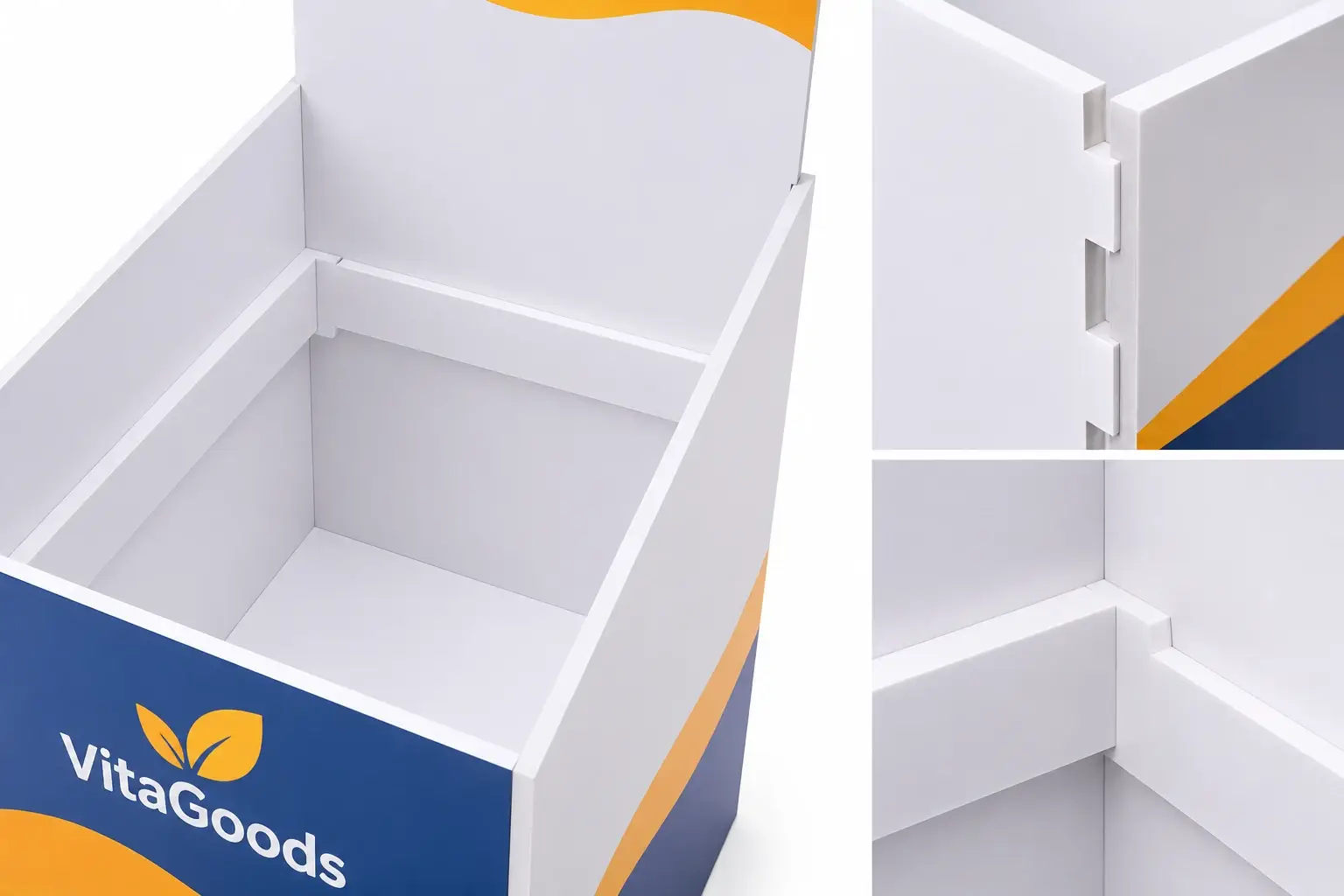
Decide Whether a Raised Internal Platform Is Needed
A raised platform can reduce the depth shoppers must reach, but also reduces usable volume. Specify whether it is fixed or adjustable and how it remains supported at each approved position.
Confirm PVC Dump Bin Display Load Capacity
Document Merchandise Weight and Load Distribution
Provide the packed weight of each SKU and the intended maximum quantity. Adding those weights establishes the merchandise load you are asking the structure to support; it does not prove the structure can carry it.
Describe uneven loading, dividers and any platform height changes. Ask the supplier to evaluate the complete arrangement, including joints and base support, rather than supply a generic capacity based on board thickness.
Agree on Sample Checks for the Complete Assembly
Have the supplier’s technical team define loading conditions, assessment duration and acceptance criteria before sample approval. Record the sample revision and agree who will assess platform deflection, joint movement, base contact and overall stability.
Keep structural approval separate from print approval. An attractive empty sample cannot demonstrate loaded performance, and a material datasheet is not a finished-display test report.
Make Dump Bin Display Assembly Practical for Stores
Ask who will build the display and where assembly will happen. Flat-pack supply adds store work; assembled supply needs its own packing and handling assessment.
Request an illustrated component list, assembly sequence and confirmation of any required tools. Have someone unfamiliar with the design follow the instructions, then review incorrect orientations, missing hardware and connections needing excessive force.
Agree on practical replacement parts before rollout. Do not advertise tool-free assembly until the approved design supports that description.
Protect the Display During Shipping
Choose packing for the actual delivery route, including any distribution center handling before stores receive the units. For assembled or flat-pack supply, request protection for printed faces, exposed edges and vulnerable connectors, plus a clear unpacking sequence.
Also clarify whether displays travel empty or preloaded. A pack that protects empty panels is not evidence that a stocked unit can survive distribution; assess the proposed product, display and shipping package together.
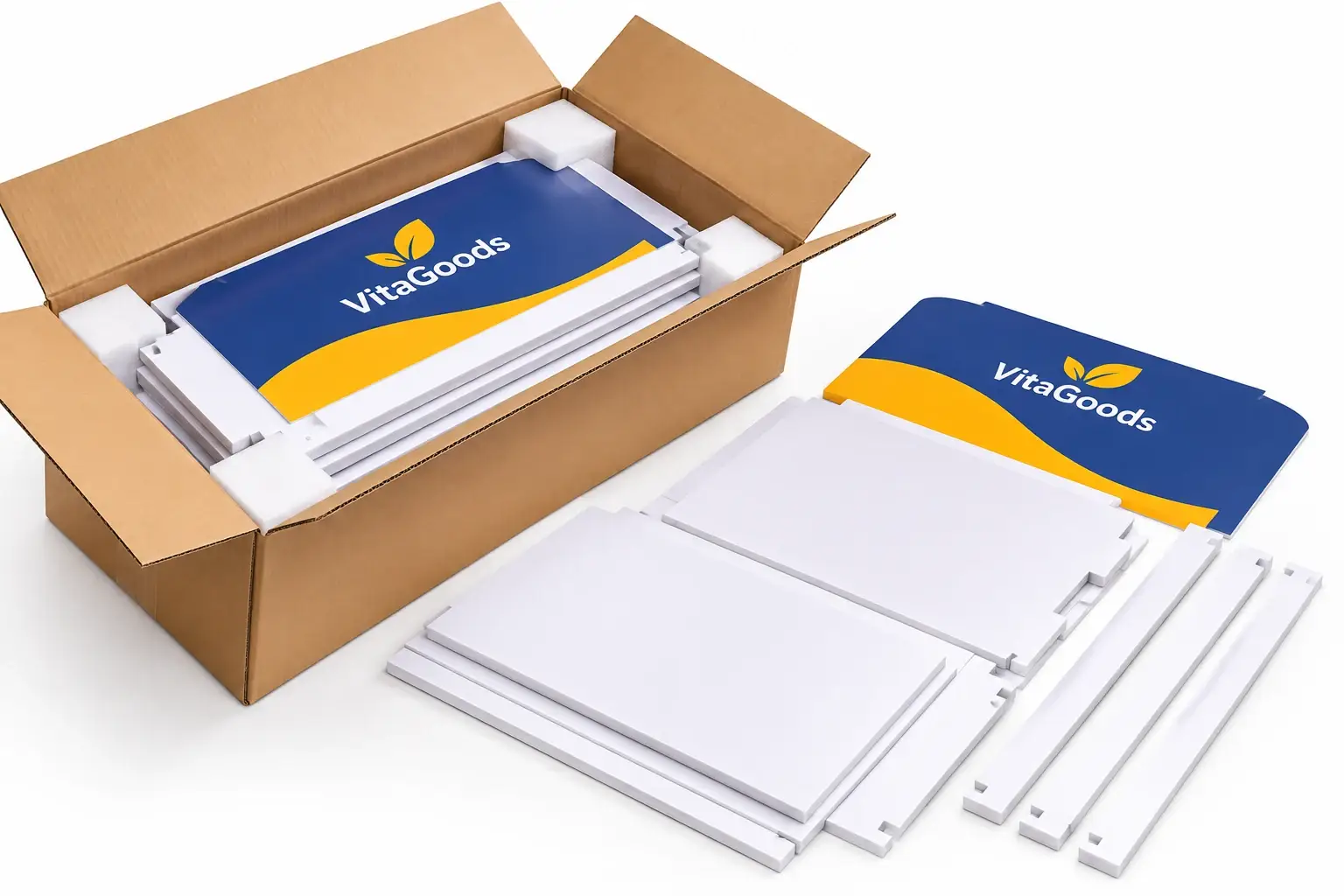
For transport validation, use the ISTA test-procedure overview to discuss a suitable approach with your packaging specialist. Procedures address different distribution conditions; do not assume one test covers every shipment.
Plan Replenishment and Low-Stock Access
Review the Bin When Full, Half Full and Nearly Empty
A retail merchandise display bin must remain usable as products sell down. Review whether packs cover signage, whether shoppers can reach remaining stock and whether loose items collect in inaccessible corners.
Use the same packaging planned for stores. A rendering filled with uniformly arranged products does not show what happens after repeated picking.

Make Refilling and SKU Separation Manageable
Set a replenishment trigger that staff can recognize, rather than telling them only to “keep it full.” Confirm whether refilling requires moving signage or disturbing the internal platform.
Where several SKUs share the bin, consider dividers and dedicated labels. Check that separation does not create narrow pockets that trap merchandise or obstruct cleaning.
What to Specify in a Custom PVC Dump Bin Display RFQ
Describe the Merchandise, Quantity and Store Requirements
When requesting a custom dump bin display for bulk merchandise, distinguish high stock quantity from heavy loading. “Bulk” should not leave the supplier guessing whether you mean packaged promotional goods or unpackaged contents.
Send a common brief to each supplier:
- Product photos or samples, package dimensions and packed weights.
- SKU mix, target stock quantity and approved floor space.
- Internal platform requirements and assembly location.
- Order quantity, store count and expected replenishment routine.
Confirm Artwork, Packing and Delivery Scope
Identify printed surfaces, artwork approval stages, individual or bulk packing, destination and required arrival date. Confirm whether the quotation includes hardware, assembly instructions, protective packaging and the agreed freight scope.
Require written confirmation of exclusions and responsibility for final assembly. Keep quotes tied to the same drawing, material specification and sample revision so you can compare like for like. For a broader cost breakdown, see our custom PVC display stand cost guide.
Frequently Asked Questions
Can one bin accommodate different package sizes?
A PVC dump bin display may accommodate different package sizes, but approve a defined range rather than assuming every pack that fits through the opening is suitable. Compare the largest pack for retrieval and the smallest for gaps around dividers or platform edges. If a future assortment changes the packed weight or stock quantity, ask for a structural review before using the same bin.
Can the internal platform be adjusted after the display is installed?
Only if adjustment is part of the approved design. Ask which positions are permitted, how the supports engage and whether adjustment requires unloading. Moving a platform changes usable volume and may change the loading arrangement. Store staff should not improvise supports or remove braces simply to fit more merchandise into the bin.
What should you check before moving a loaded display?
Confirm whether the display was designed to be moved while stocked. If that use has not been approved, unload it and follow the supplier’s handling instructions rather than dragging it by the header or side panels. Ask where staff may grip the structure and whether a different handling arrangement is needed for routine store changes.
Can the graphics be changed between promotions?
Possibly, if replaceable graphics are included in the design; confirm which faces can be updated, how the graphics attach and whether removal could damage the printed surface. Request compatibility checks for the proposed graphic system rather than applying an unapproved adhesive. Keep artwork changes separate from structural changes, and agree who supplies replacement graphics.
Should every store receive the same bin?
Not necessarily: group stores by approved space, product assortment and installation requirements before standardizing the design. A shared graphic theme does not mean every location can accept the same footprint or stock quantity. Identify exceptions in the order schedule, and label different versions clearly so distribution teams send the correct display to each store.
Final Thoughts
Before ordering, confirm that the bin suits your packaging, the support arrangement has been assessed and stores can assemble and replenish it as intended. For a custom PVC dump bin display, send pvcdisplay.com your project requirements, including product details, capacity target, store dimensions, quantity and destination. As a one-stop PVC display solutions supplier, we can help coordinate these requirements; ask for a proposal tied to your approved brief.