Outer Profiles
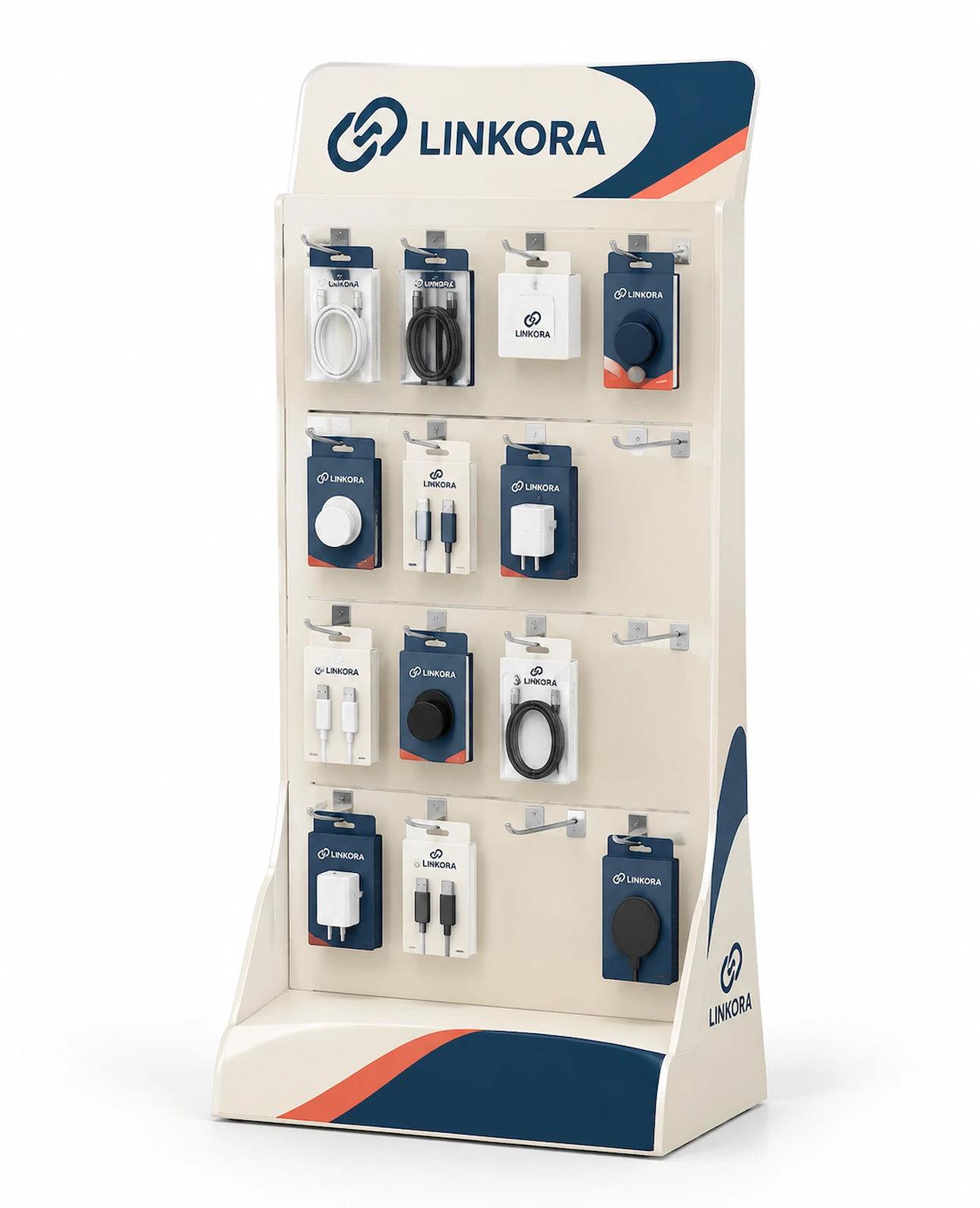
Follow the brand silhouette with curves, straight sections and practical transitions between them.

Custom shapes, clean cut edges and well-fitting panels start with how the board is cut.
PVC foam board is used for shaped headers, product openings, shelves and printed retail panels. The cutting method affects the finished outline, exposed edges and how the components fit together.
Explore common cutting and fabrication methods, the details worth checking on a sample, and how to prepare a custom display for production.
Explore Cutting MethodsA cut feature should help present the products, carry the branding or connect the display. This table shows where each detail contributes.
| Display Detail | Fabrication Role | Finished Result |
|---|---|---|
| Shaped header | Cut an outline around the brand design. | A recognizable silhouette above the products. |
| Side panel | Position shelf openings within the panel outline. | Shelves and sides that line up. |
| Shelf end | Shape the end around its support and connection. | A shelf that seats in the right position. |
| Product opening | Size the opening around the product or fitting. | Space to place and remove the item. |
| Divider intersection | Cut slots where the dividers cross. | Compartments for the product range. |
| Hook mounting area | Locate holes or slots for the chosen fitting. | A connection suited to the hardware. |
| Base and back panel | Position joining edges and locating features. | A base, back and sides that align. |
| Graphic boundary | Align the printed image with the cut outline. | Branding positioned on the finished panel. |
A cut feature works with the panel, fitting or product beside it.
A closer view shows details that disappear in a full product photo.


Follow the brand silhouette with curves, straight sections and practical transitions between them.
Openings locate products or fittings while leaving enough board around them to support the design.
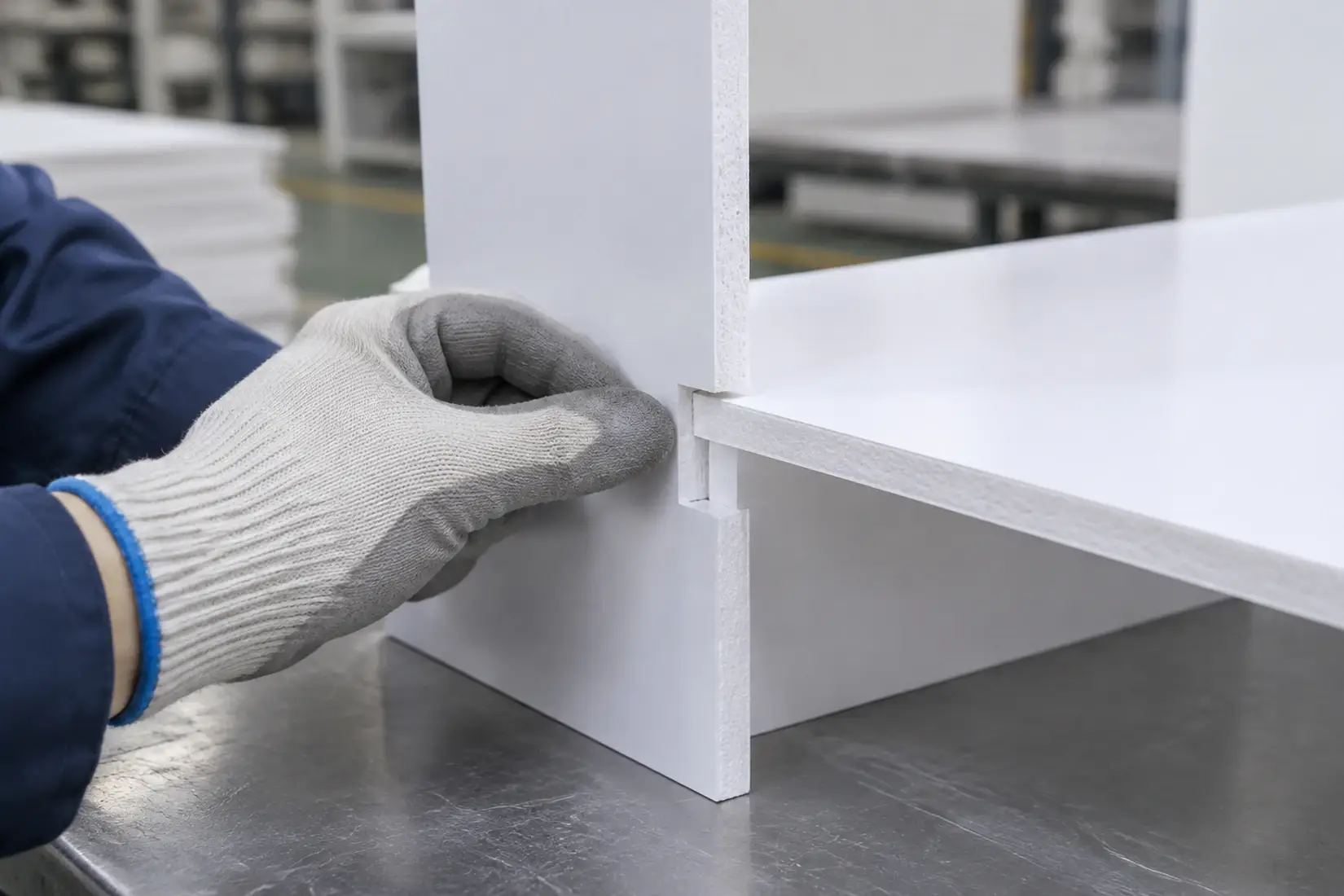
Tabs help position adjoining panels as the display goes together.
Slot width and shape must suit the connecting panel and actual board thickness.
Plan hole positions with the fitting, surrounding material and access needed during assembly.
Similar outlines can need different openings or printed faces. Identify each panel by its position.
The inside profile must leave room for the adjoining component to sit fully in position.
Keep the cut-edge appearance distinct from the printed face, especially around openings seen at close range.
PVC foam board fabrication combines cutting and finishing operations. Sheet thickness, panel shape and the required edge finish help determine which method is suitable.
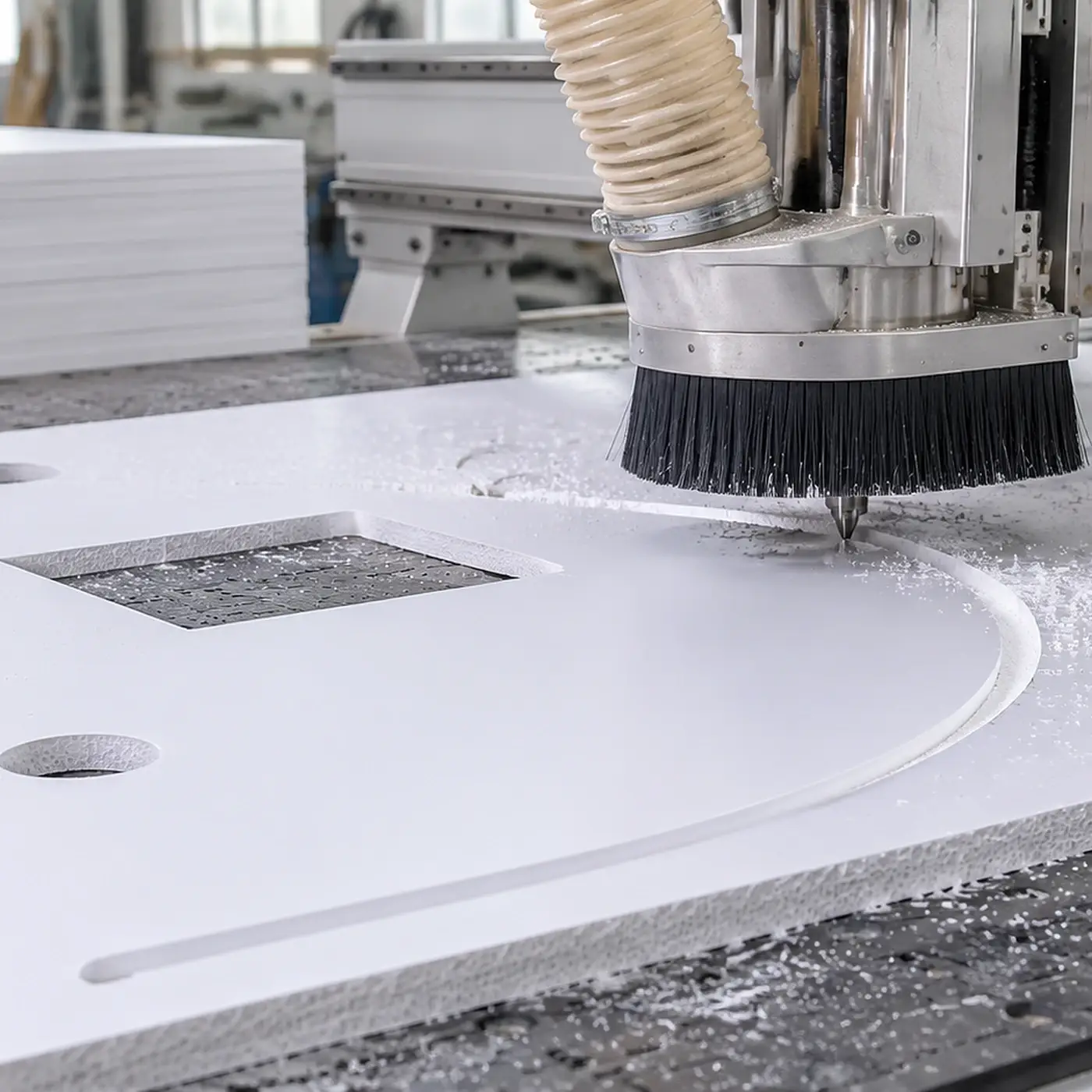
A computer-controlled router follows digital paths to create shaped panels, internal openings and slots. It is useful when a panel combines several cut features.
Saw cutting is commonly used for straight edges, rectangular back panels and shelf blanks. It suits simple panel outlines; a CNC router can also make straight cuts.
Contour cutting follows curves or irregular outlines for headers and shaped sides. The term refers to the shape and includes work done with a CNC router.
Drilled holes locate fasteners or hook fittings. Cut slots receive tabs or dividers, with their size and position based on the actual board and connecting component.
Light sanding or suitable secondary machining can smooth rough cut areas. The physical sample shows the finish required for exposed edges.
A distinctive header, shaped side or product opening can give the display a clear identity. Give the most attention to features shoppers see and the details that help present the merchandise.
Extra cut features and separate pieces also add handling and assembly work. Simpler connections and fewer loose parts can make a design easier to produce, pack and install. The right balance depends on the complete construction.
A useful custom shape earns its place through appearance, product presentation or assembly.
On white PVC foam board, the cut edge normally remains white even when the face carries a dark print. Around a shaped header or product opening, that edge becomes part of the display's appearance.
Rough patches, small burrs or handling damage are easier to notice at close range. A representative physical piece shows the finish to expect on exposed edges.
A visible white edge is the exposed board material. Any additional edge treatment must be specified separately.

Cutting accuracy covers more than overall width and height. Slot fit, hole positions and edge quality also depend on the board used.
Density and surface quality affect how small features hold their shape and how the cut edge looks.
Check critical hole locations, slot widths and panel outlines against the drawing. A correct outer size alone does not confirm fit.
Narrow sections around openings and projecting tabs need enough board and support to retain their shape.
A slot drawn for a nominal thickness can fit differently if the actual sheet varies. Check the board used for the sample.
PVC display interlocking joints need room for insertion without an excessively loose fit. Check tabs, slots and fittings together.
Confirm critical cut features and their fit on a physical sample. Record changes against the final drawing.
Cutting tolerance is the acceptable variation from the drawing. It is set for the actual design and material; no single figure applies to every display.
For board grades and thickness choices, see our PVC foam board thickness guide.
The artwork and cutting outline should show the same finished panel. Leave space around logos and account for graphics hidden by shelves or joints.
Left and right panels also need the correct viewing direction. A print can look right as a flat image but face the wrong way after assembly.
Use the final PVC panel layout when preparing artwork. Our PVC display artwork and printing guide covers the print-file details.
The same machining methods serve different purposes across a retail range. The detail should follow the merchandise and how shoppers use the display.
A shaped opening can locate a tester or holder within a counter display. The surrounding surface leaves space for the product to be lifted and replaced.
Mounting holes or slots connect the panel to hook hardware on PVC peg hook displays. The fastening area forms part of the support design for the loaded product.
Shelf ends and side-panel openings locate the horizontal and vertical panels. Accurate positioning helps the entire display fit together correctly.
We work with PVC production partners to bring drawings, material specifications and printed faces into one production reference.
Identify panels, cut features and their orientation.
Link each component to its board grade and thickness.
Use the same outline for cutting and artwork.
Record sample changes before releasing the bulk version.
Our PVC display sampling guide covers the full sample-to-production process.
Small conflicts between parts can be hard to spot in an overall rendering.
CORNER GEOMETRY
A tab can catch against an inside corner instead of sliding fully into place. Check both shapes on a sample and resolve the conflicting detail before bulk cutting.
PART ORIENTATION
A left panel can resemble a right panel while needing different openings or a different printed face. Link each panel to its cut outline and viewing direction.
ASSEMBLY ACCESS
A mounting hole can be correctly positioned yet become blocked after another panel is fitted. Check the installation order and access to the fitting before repeating the component.
Illustrative fabrication situations.
Protect exposed edges, shaped corners and tabs from damage during handling.
Label similar panels and small fittings so the receiver can find the correct components.
For packing formats and delivery arrangements, see our PVC display packing and shipping guide.
I recently ordered a custom printed stand and I couldn’t be happier with the result! The quality is outstanding – the print is sharp, vibrant, and exactly as I envisioned. The stand itself feels sturdy and well-made, clearly designed to last through events and regular use. What impressed me just as much was the service. The order was processed quickly and delivered right on time, which made planning for my event stress-free. It’s rare to find a combination of excellent craftsmanship and reliable delivery, but this experience ticked both boxes. Highly recommend for anyone needing a professional, custom display solution!
From Australia
Delivery: on time all the time quality: is amazing design: very helpful figuring out hard to produce layout service: the service is amazing and tessie is always there for me to support my display needs, quickly and accurately.
From Canada
I couldn’t have asked for a better experience from start to finish. The customer service was outstanding, and the staff was incredibly patient and knowledgeable when refining my artwork. They even offered suggestions to slightly alter the style—completely free of charge—which made the final display stands look even more high-end and professional. I was thrilled to see how sharp and glossy the prints turned out, and the dimensions were exactly as requested. Best of all, despite the custom modifications, printing and shipping times were lightning quick, beating any other provider I’ve worked with in the past.
From United States
To be honest the start was a little difficult but after changing the contact person to tracy, i can highly recommend the quality and service. Tracy is doing an awesome job, try to understand all your needs, deliver outstanding advice and service. If you are looking for a good quality and service, you are in the right place here. And if you want outstanding service, ask for tracy and thank me later. 😉
From Germany
Very satisfied with the quality of work. The cardboard displays and PVC displays are very easy to install. We have worked together for over 10 years on many of my display projects. They understood what I wanted and revised my ideas until I was satisfied. I will continue using them, thanks again
From United States
Common methods include CNC routing, straight cutting, contour cutting, drilling, slot cutting and edge finishing. The choice depends on the panel shape, board specification and visible finish. A router can produce both straight and shaped cuts.
CNC routing uses a rotating cutter guided by a digital file to make curves, internal openings, slots and straight edges. Saw cutting is commonly used for straight cuts and rectangular panels. The choice depends on the shape, board specification and required edge finish.
Yes. Shaped headers and product openings can be included in a PVC foam board display. Narrow sections, inside corners and supporting areas must suit the material and complete structure.
Not automatically. Cutting white foam PVC exposes the white board, even when the face has dark graphics. Any additional edge treatment is specified separately.
Some interlocking designs allow assembly by hand. Others use fittings or partial pre-assembly. The sample confirms which method suits the design.
The cutting tolerance is set for the critical features on your drawing and the actual board used. We confirm acceptable fit on the sample rather than promise one accuracy figure for every design.
Useful starting information includes a dimensioned drawing, product dimensions and design references. For defined outlines, provide vector cut paths, such as DXF or vector PDF, with units and scale identified. If you only have a sketch, we can discuss the design before production files are prepared.
Yes. The drawing provides a starting point, but its panel layout and joints must suit PVC foam board. Any design changes are confirmed before making the sample.
Yes. We can make one sample for approval before a bulk order. Sample charges and timing are confirmed for the project. Our bulk MOQ is 100 displays.
Share a concept, drawing or product reference. We can discuss suitable panel construction, machining details and the next sample step.