Navy and coral stationery display shelves with notebooks and a matching pen counter
CUSTOM STATIONERYDISPLAYS
Make the Whole Range Easy to Explore

Custom PVC foam board displays for pens, notebooks, art materials and packaged stationery sets.

Bring writing tools, paper goods and creative supplies into one clear branded collection, with compartments, hooks and shelves that leave each pack easy to see and take.

Custom Stationery Displays for Writing and Paper Goods

A stationery display helps shoppers compare a collection of small products. Pens need an understandable order, notebook covers deserve room to be seen, and packaged sets need a position that lets customers compare them. We develop custom PVC foam board fixtures for stationery brands, distributors and stockists, with printed panels and the appropriate compartments, shelves or specified hooks.

The starting point can be a compact counter assortment, a dedicated floor stand or a combined writing-and-paper collection. A useful stationery display gives each format a deliberate place while keeping the brand recognisable across the unit. The result should invite browsing without asking shoppers to sort through mixed stock.

Choose the Format for Your Stationery Assortment

A stationery display can organise loose products, retail packs or a selected combination of both. These six formats offer different ways to present the range.

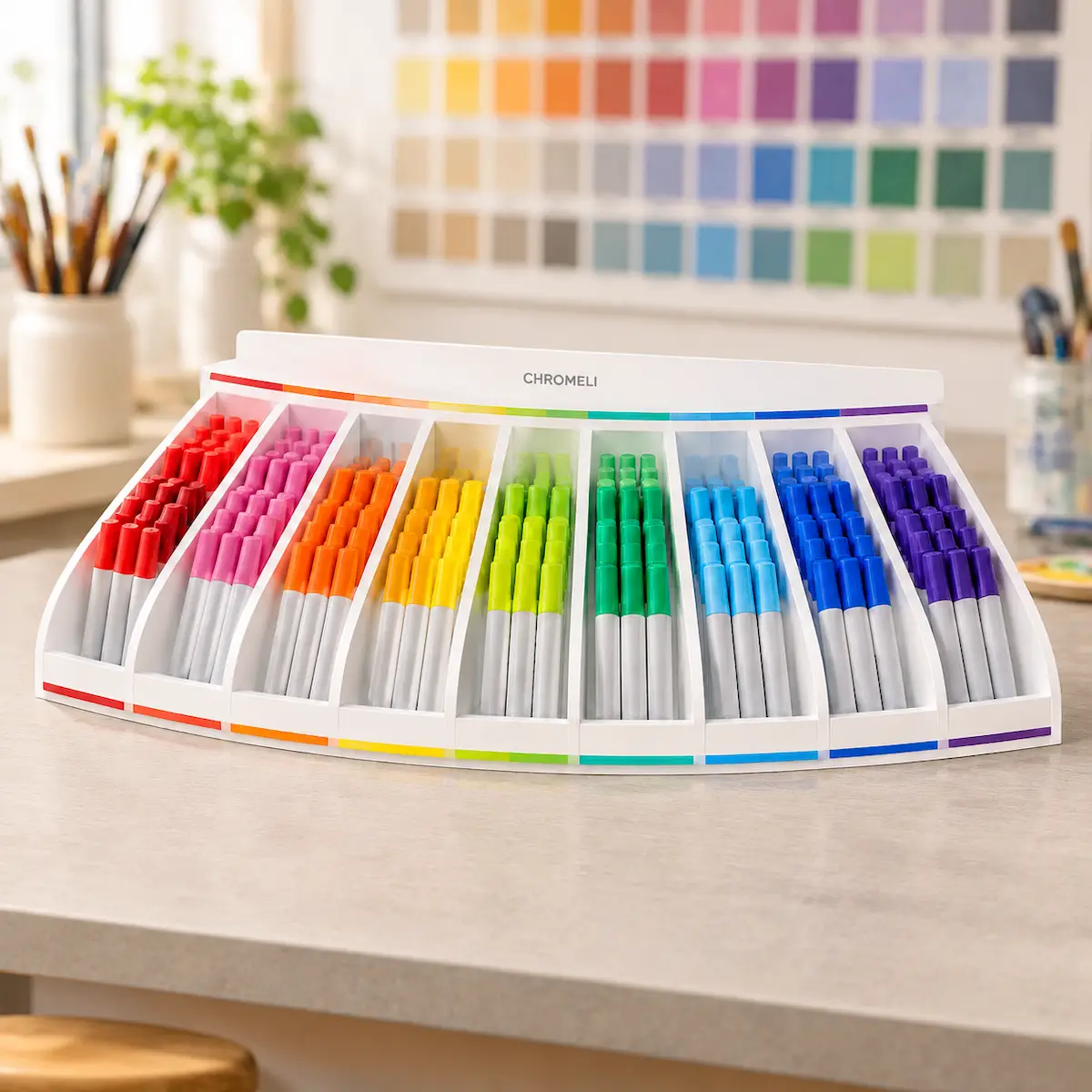
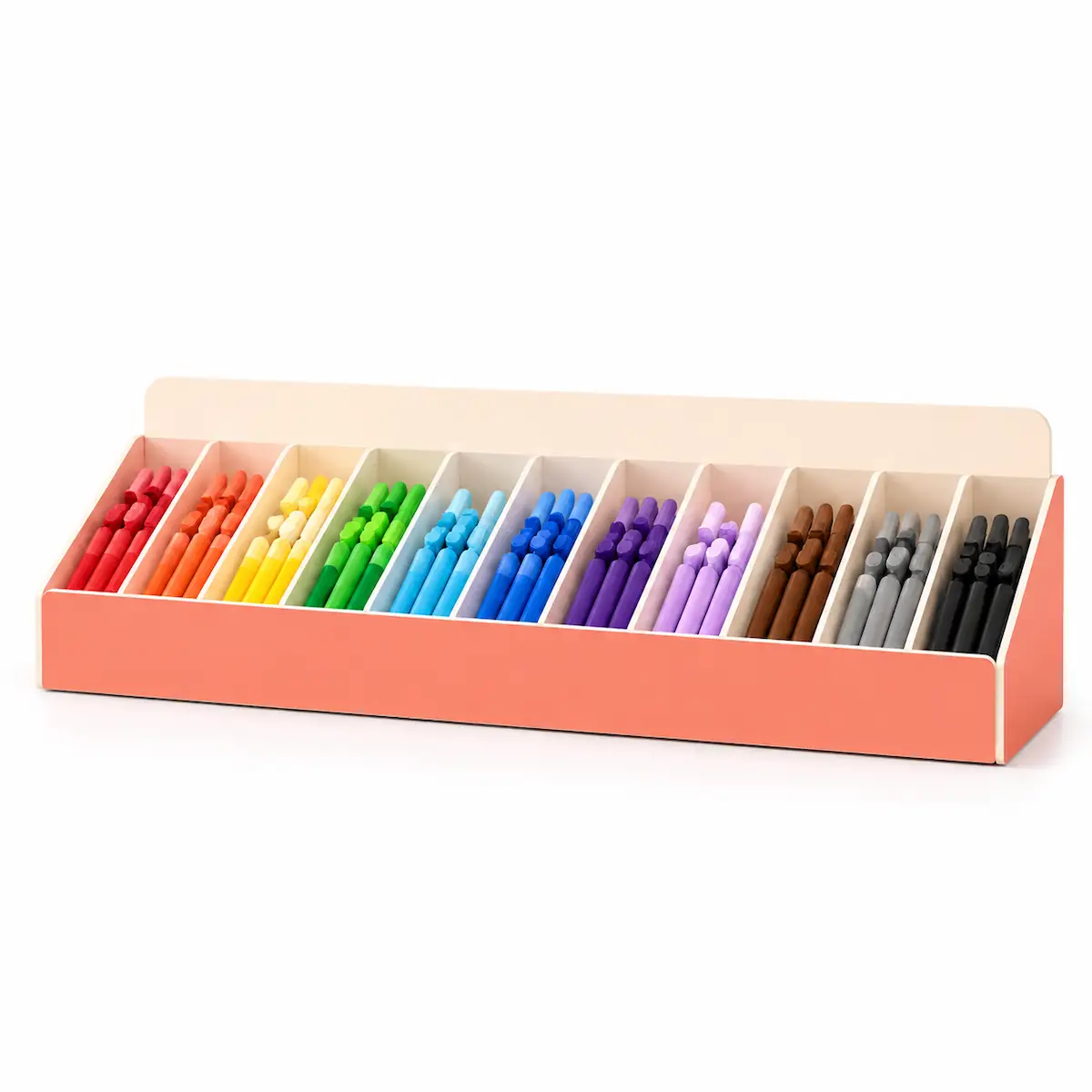
Divided PVC countertop fixture for loose pens and marker groups

Divided Pen Counter

Loose pens, pencils and markers.

Individual channels give colours and writing types their own positions. This stationery display keeps loose products separated while showing enough of each item for shoppers to see its colour, tip or type. A modest front wall contains the stock, and a stepped rear area can lift smaller items into view. The counter stand works well for a selected range of writing tools with enough space for customers to remove one piece comfortably.

Discuss This Design
Open stationery shelves displaying notebook covers above a stable base

Notebook Shelf Display

Journals, exercise books and sketchbooks.

A front-facing notebook shelf lets the cover introduce the product before the customer picks it up. This stationery display uses shelf height and depth to accommodate the collection without hiding a smaller format behind a taller book. Several copies can sit behind a clear front position. The printed side panels introduce the brand while the shelves show the actual cover designs and available sizes.

Discuss This Design

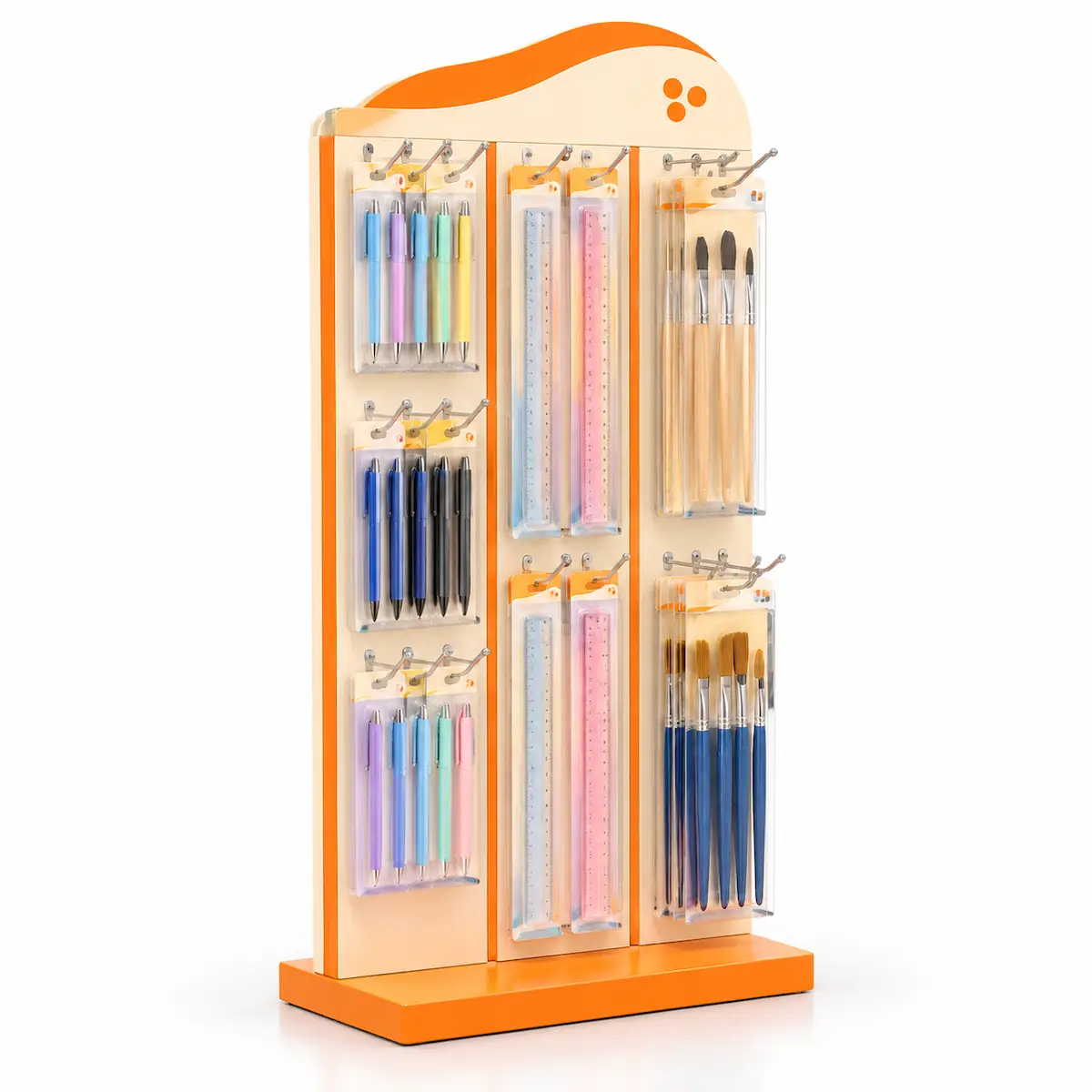
Peg hook fixture separating hanging ruler packs and stationery sets

Peg Hook Stationery Rack

Blister packs, rulers and packaged sets.

Hanging stationery needs more than a repeated row of hooks. A short pen pack and a long ruler set require different clearances. This stationery display allocates each section around the complete hanging pack, including the header and hanging hole. Customers can read the pack fronts, and adjacent products have room to move when one is removed. Hook specification and connections follow the intended assortment.

Discuss This Design

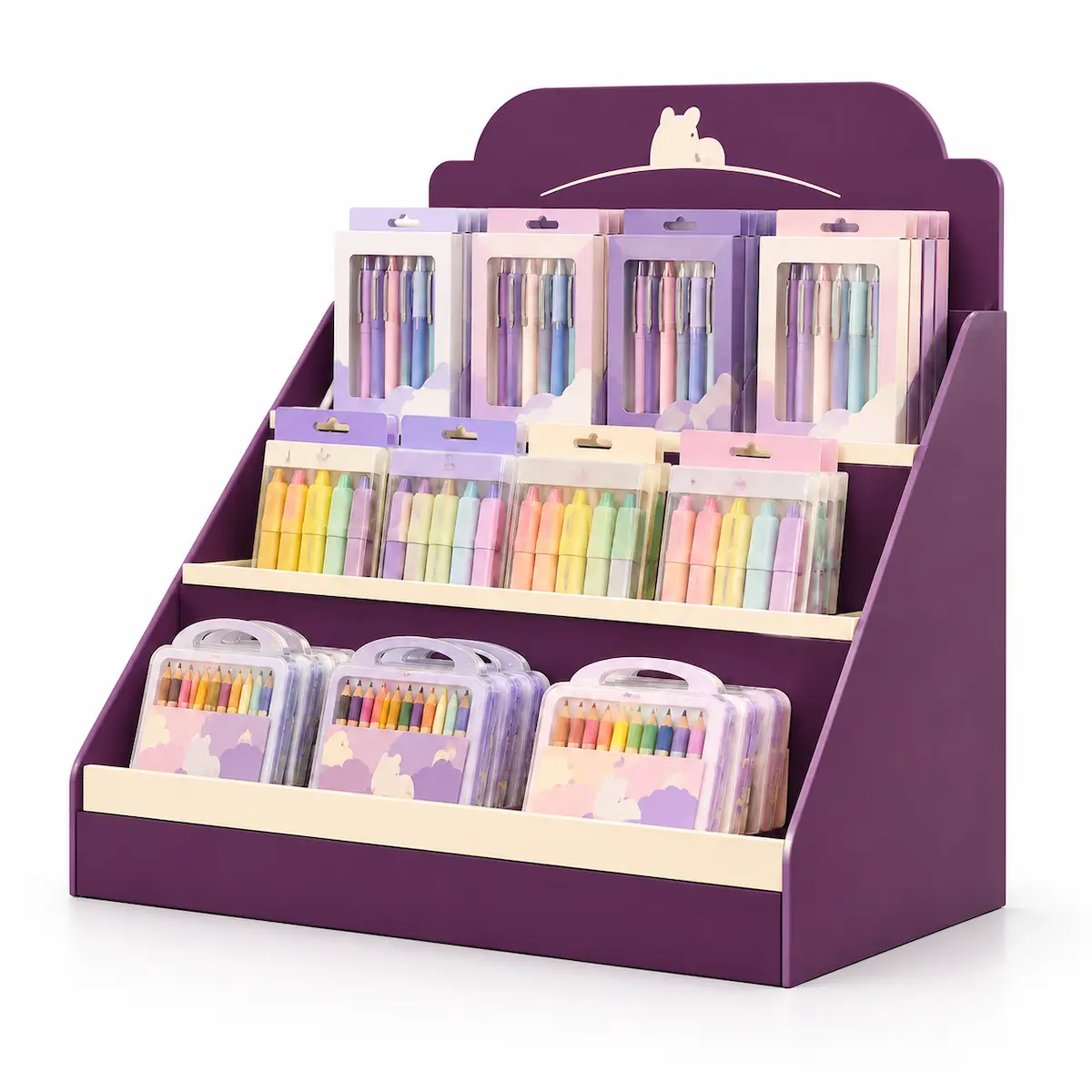
Stepped counter display presenting boxed writing sets face forward

Stepped Set Counter

Boxed writing sets and compact gift stationery.

Stepped rows bring the rear sets above those at the front. This stationery display suits a limited collection of pen sets, highlighters or small creative kits that shoppers compare by looking at the pack. Each step has a defined front position and enough depth for the chosen quantity. Keep the set names and price information associated with the correct row rather than filling the header with every detail.

Discuss This Design

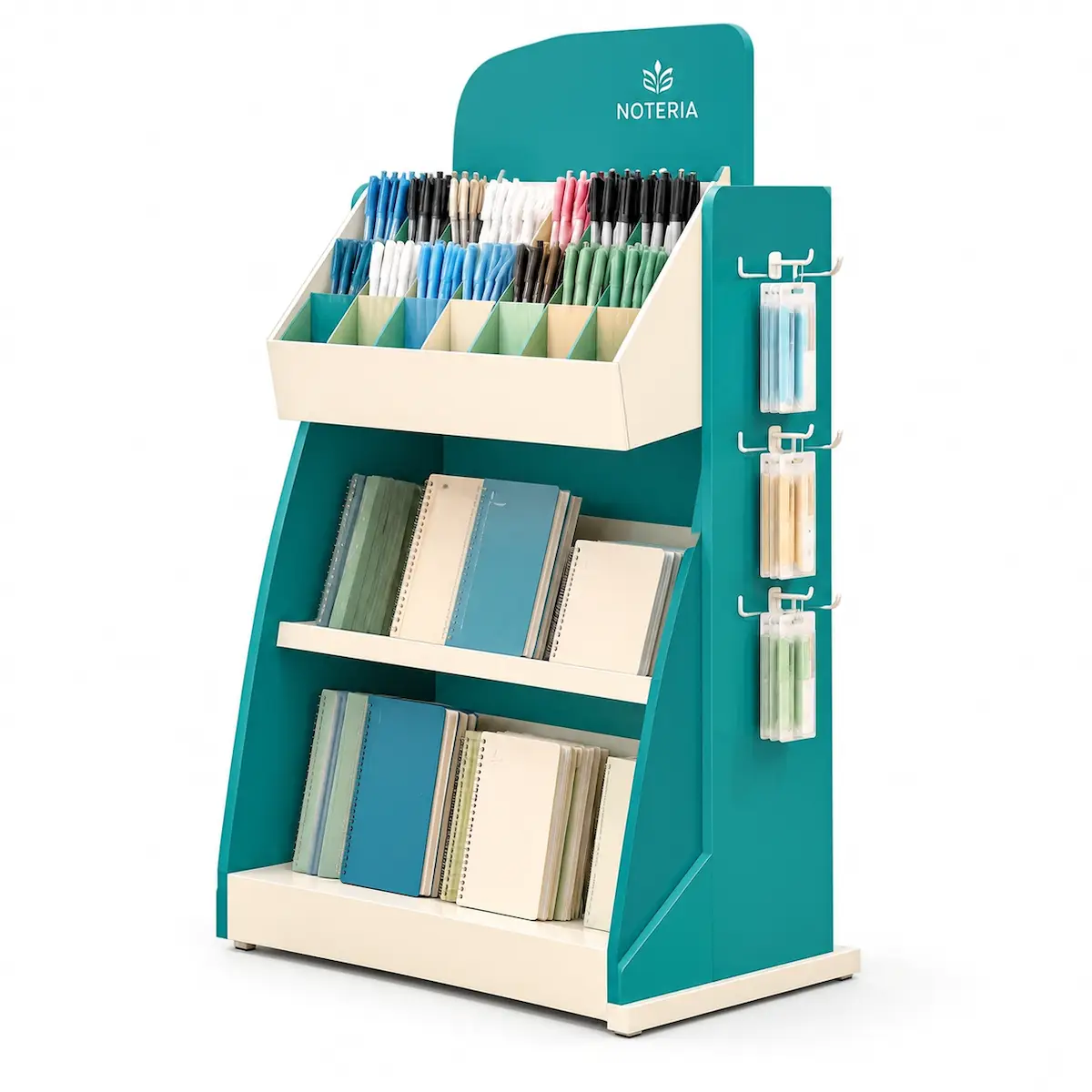
Hybrid stationery fixture with writing-tool compartments and notebook shelves

Mixed Writing and Notebook Stand

A coordinated collection in one floor position.

Shelves can present notebooks below a compartment section for pens, with specified hooks beside them for packaged accessories. This stationery display gives related items a shared brand presence while retaining separate shopping areas. The layout should make the link between the products obvious without putting every item into the same kind of holder. A compact collection often works better than an oversized catalogue compressed into one unit.

Discuss This Design
Slim shelf-side fixture holding a compact stationery assortment

Compact Shelf-Side Display

A small range beside an existing stationery bay.

A narrow fixture can add a selected accessory or new writing range near the main department. This stationery display can use small trays or specified hanging positions according to the goods. Its projecting depth and supported fixing arrangement need to suit the store location. The assortment should remain intentionally small, with a readable header and enough clearance for customers passing along the main shelf.

Discuss This Design

Build a Colour Library for Loose Writing Tools

A wall of bright pens can look inviting and still be difficult to shop. A stationery display can organise loose writing tools into a simple sequence, such as colour families within a single pen type. Each channel then has a job, and a shopper can follow the range without lifting out several unrelated products. An incline or stepped compartment can improve visibility where shorter products would otherwise disappear behind the front row.

The display should also allow a pen to be returned to its intended place. Clear channel boundaries and discreet range markers help preserve that order after browsing. Keep specialist information close to the correct group, and let the larger printed areas introduce the overall collection. The stand becomes an orderly colour library with the products themselves supplying most of the visual interest.

Discuss a Pen Counter
Colour-ordered marker channels in a low stationery countertop fixture

Match the Openings to the Way Stationery Is Picked Up

A stationery display needs room for fingers as well as room for products. Loose pens may be presented upright, on an incline or horizontally, depending on how the range is packaged and identified. The compartment depth should keep the assortment orderly while leaving the useful colour, tip or type information visible. A holder that swallows most of a short pencil makes selection harder even when it contains plenty of stock.

For a notebook or boxed set, the opening needs to accommodate the complete retail pack and its natural handling movement. PVC foam board provides printable panels and shaped outlines, while supports and fittings are selected for the structure. The custom stand can include dividers, shelf lips and replaceable information areas where they are useful. These details are developed together so the display looks coherent when loaded.

Discuss Your Stationery Layout
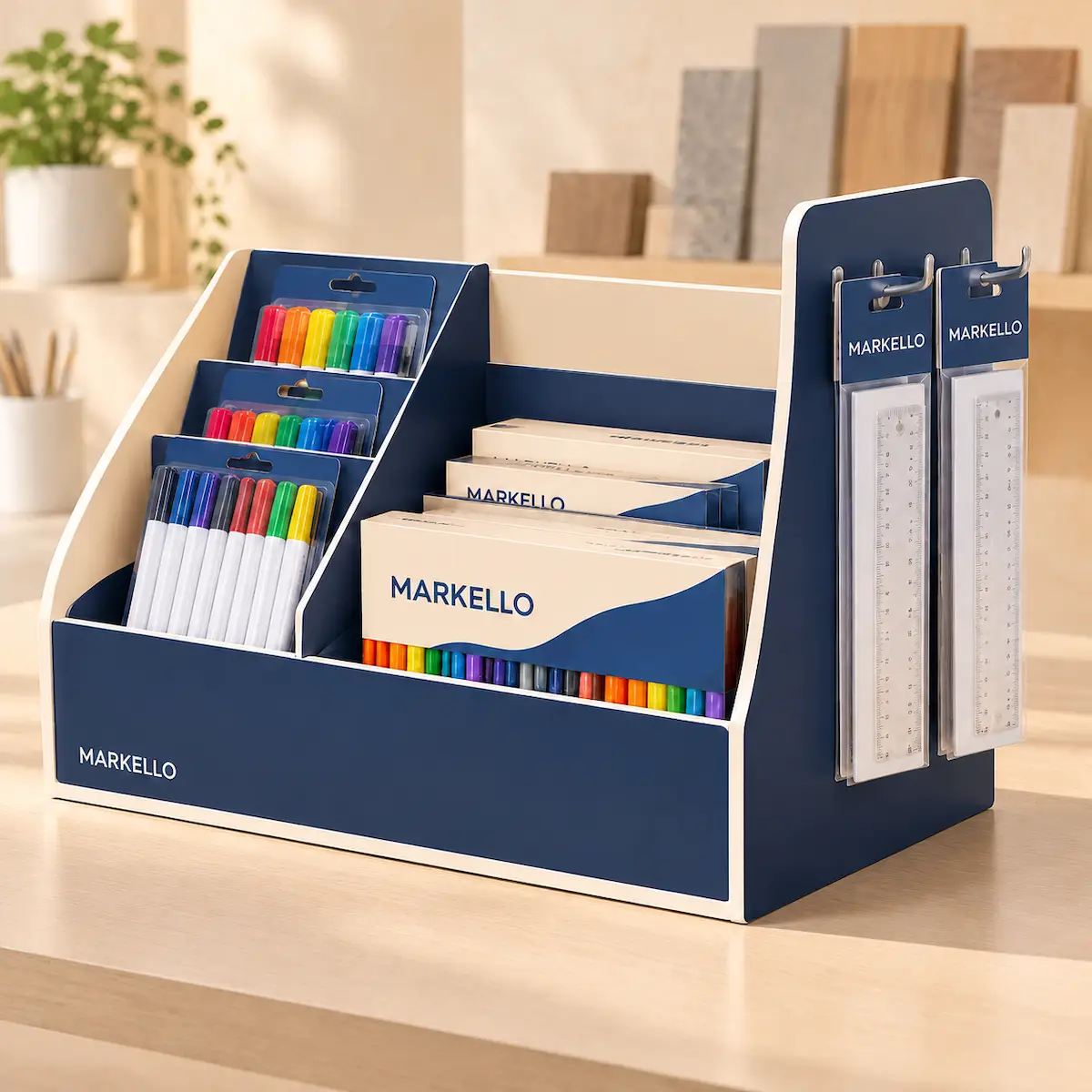
Stationery counter with marker channels, a boxed-set shelf and ruler hooks

Give Long Stationery Packs Their Own Hanging Space

Merchandising DetailDisplay Approach

Ruler and Brush Sets

Long retail packs need vertical clearance below their hanging point. A stationery display can allocate a dedicated strip for rulers, brush sets or drawing instruments so their bottoms do not rest on the products below. This keeps the pack front readable and the lifting movement comfortable.

Compact Blister Packs

Small blister packs can use closer groupings when their width and hanging position allow it. Keep each type identifiable, particularly when packs contain similar-looking refills or accessories. A uniform top line is useful only when the complete packs can hang naturally without overlapping their neighbours.

A Short Category Message

Use the header above the relevant hook zone for a short category name. Price and pack information can remain nearer the individual positions. This lets the stationery display communicate both the overall group and the specific choice without repeating a long product description across every printed surface.

Support for a Consistent Stationery Range

We coordinate the fixture structure, printed panels, sample and packing around the agreed retail collection. A stationery display project can involve several pack types and more than one stockist format, so a consistent record of the layout matters. Our role is to keep the practical arrangement and brand treatment connected through development. One sample is available for review before bulk production, and the bulk minimum order is 100 units. Sample charges, order arrangements and delivery details are confirmed for the project.

  • Established: 2004
  • Company Team: 106 Employees
  • Projects: 100+ Each Year
  • Production Support: Reliable Partner Factories
Discuss Your Display Project
PVC DISPLAY reception area with an orange and blue shelf logo on the wall

Let Notebooks Sell Through Their Covers

A notebook is often first noticed through its cover, colour and format. A stationery display should give that front-facing product a stable position with enough visible cover to express the design. Repeated shelves can present a collection in a calm sequence, while a small feature position can introduce a new series or coordinated writing set.

The retail arrangement also needs to work when customers handle the books. A front position with stock behind can keep the choice visible as copies are purchased. Different book sizes are easier to compare when their groups remain distinct. Where a sample book is provided for paper inspection, give it a defined place beside the matching stock so the demonstration copy is easy to identify and return.

Plan a Notebook Display
Indigo notebook display with front-facing covers and an open sample position

Keep the Agreed Assortment in the Production Reference

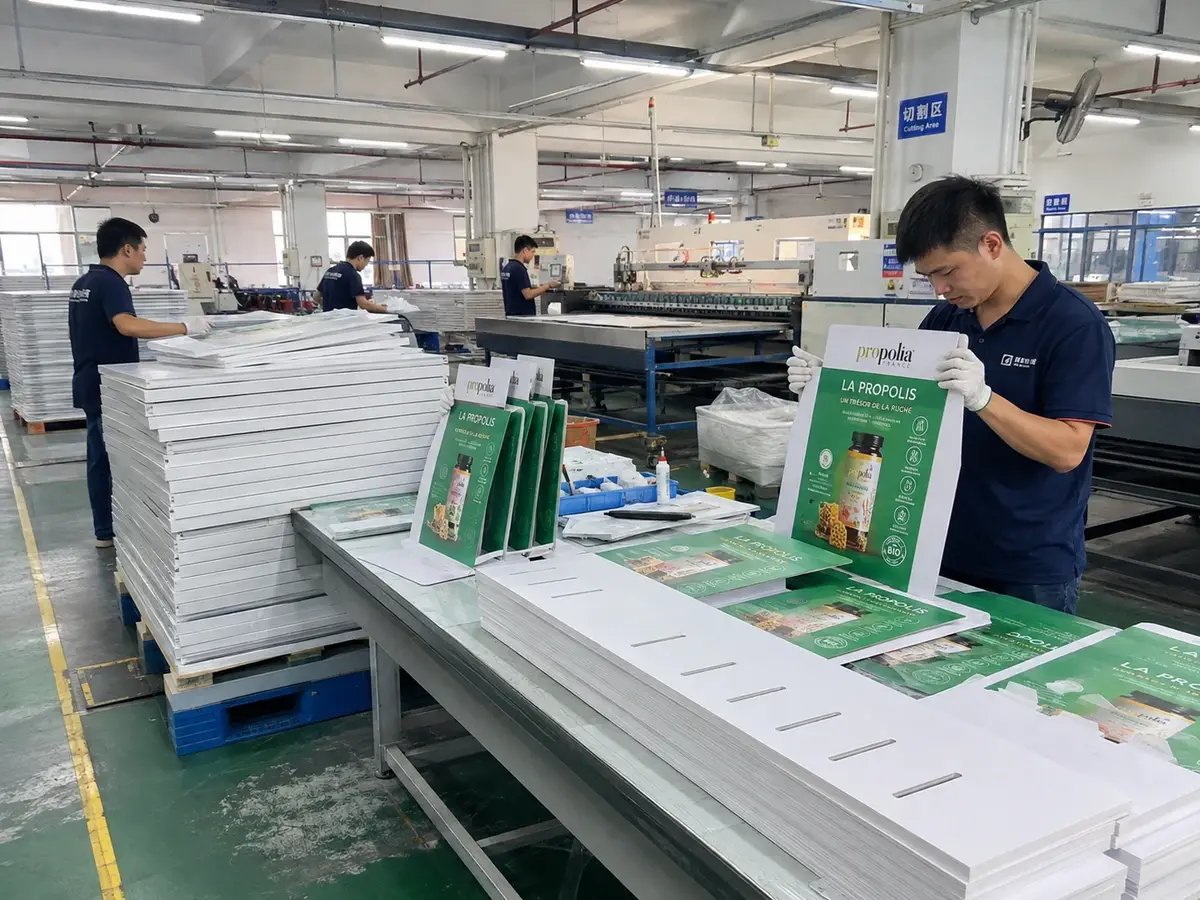
The approved stationery display layout records which products belong in each compartment, shelf and hook zone. Panel artwork and component positions are checked against that arrangement before the bulk order is prepared. If a pen pack or notebook format changes during development, the affected position is reviewed together with its printed identification. This keeps the production reference tied to the assortment that will actually reach the stores.

Factory process collage showing production preparation, workshop overview and export loading
OUR FACTORY CREDENTIALS

Certifications & Recognition

Supplier assessments, industry recognition and factory achievements reflecting our experience in custom display manufacturing.

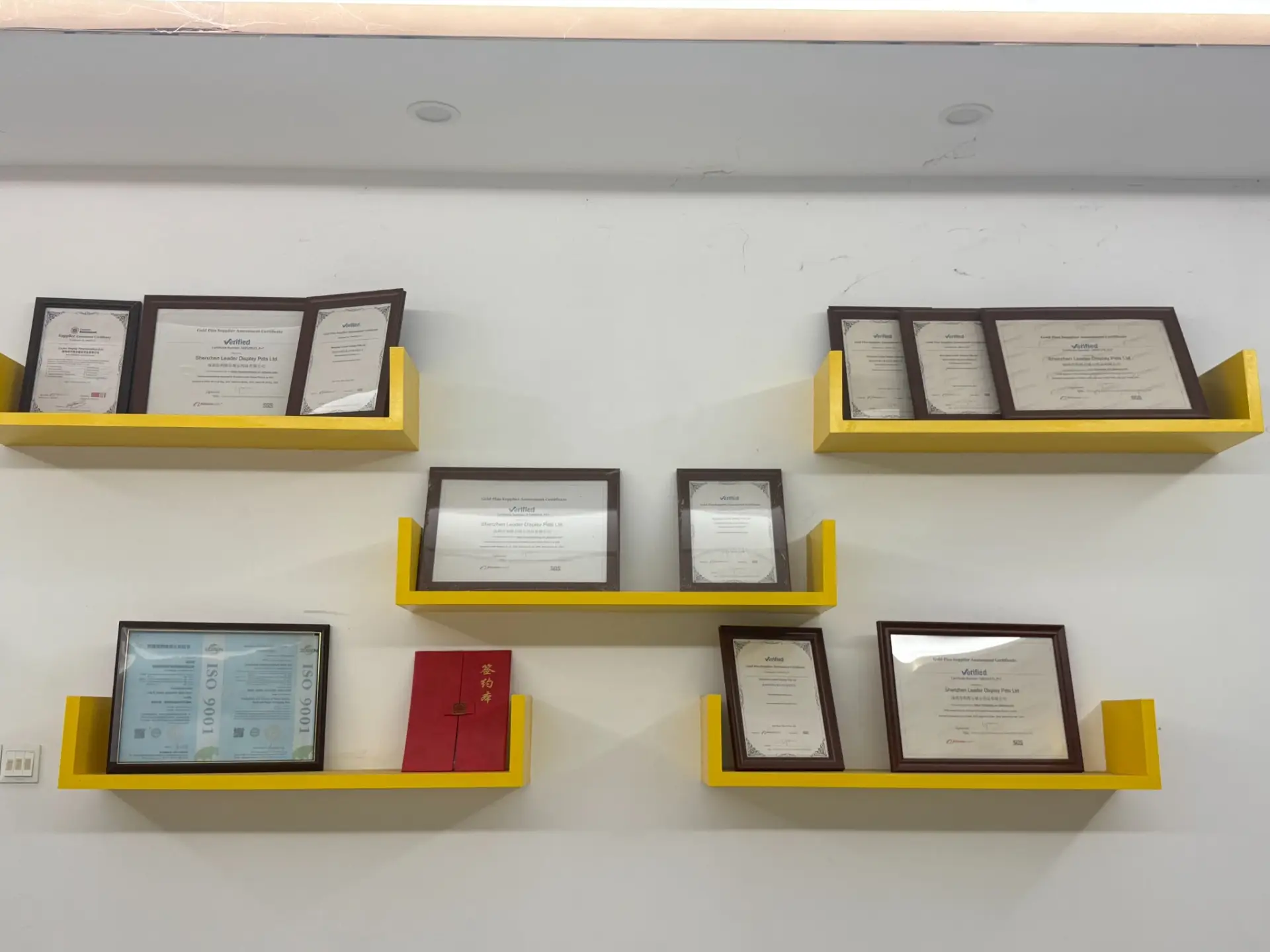
Our factory maintains a collection of supplier assessment certificates, business recognition and industry awards.

For custom PVC display projects, we can review your specific documentation and material requirements and confirm the information available for your order.

Get a Quote

Practical Details That Improve a Stationery Collection

An Understandable Range

A stationery display can introduce writing type, colour family or intended use before presenting individual variations. That order helps a broad collection feel manageable. The printed headings should agree with the physical arrangement so shoppers can follow the same logic from the header down to the product positions.

Small Products Are Easy to Find

Defined compartments keep pen refills, erasers and other compact products from disappearing into a mixed pile. The openings should remain accessible when stock is reduced. A shallow, deliberate selection often makes the goods easier to browse than a deep box containing several unrelated product types.

Book Covers Remain Visible

Notebooks and sketchbooks can be grouped by format with one clear front-facing cover per design. The supporting shelf should let the front product sit naturally. Additional copies can be held behind it without turning the display into a wall of overlapping covers and partially hidden product names.

Useful Information Near the Goods

A stationery display benefits from short, well-placed labels for details such as pen type, pack quantity or paper format. These positions should be planned into the layout. They give the customer a practical comparison point while allowing the main printed panels to carry a simpler brand message.

A Layout That Fits the Store

A floor display can hold several related groups, but each needs enough visual space to remain distinct. Keep the lower assortment accessible and the upper message readable. The stand should fit the intended store position with a clear approach to the merchandise from the customer side.

One Brand Across Different Formats

The same collection may need a counter unit in one shop and a larger fixture in another. A stationery display can retain its colour coding, product order and printed identity across both. Choose fewer products for the smaller version so it stays easy to browse.

A Back-to-School Range with a Clear Starting Point

A Focused Essentials Selection

A school campaign can bring notebooks, pencils and a few supporting accessories into one location. The stationery display should establish the main group first, then add related products with a clear purpose. A small selection of related essentials is easier to understand than the full catalogue.

Separate Sets from Singles

Packaged sets and individual writing tools support different shopping choices. Give each a recognisable area so the customer can see which products are sold as a complete pack. A shelf or stepped tray can present the set while adjacent compartments retain the individual colours or writing types.

Campaign Graphics with a Useful Role

Printed campaign panels can connect the assortment visually, but they should leave the products and their identifiers readable. A simple school message, consistent range colours and clear category positions can make the fixture recognisable without surrounding each small item with a competing promotional statement.

Worker inspecting printed PVC display panels and component fit on a production table

Check the Smallest Product Positions

Sample review includes the narrow compartments and the shortest products, as these can reveal access problems that a full-width shelf does not show. We check how the intended stationery sits, how a customer removes it and whether neighbouring positions stay usable. For a stationery display with hanging packs, the loaded hook zones and their connections also form part of the agreed review. The actual products and arrangement guide these checks.

Discuss Sample Review
Illustrative factory scene of a worker checking printed dump bin panels and protective packing before shipment

Keep the Store Kit Easy to Identify

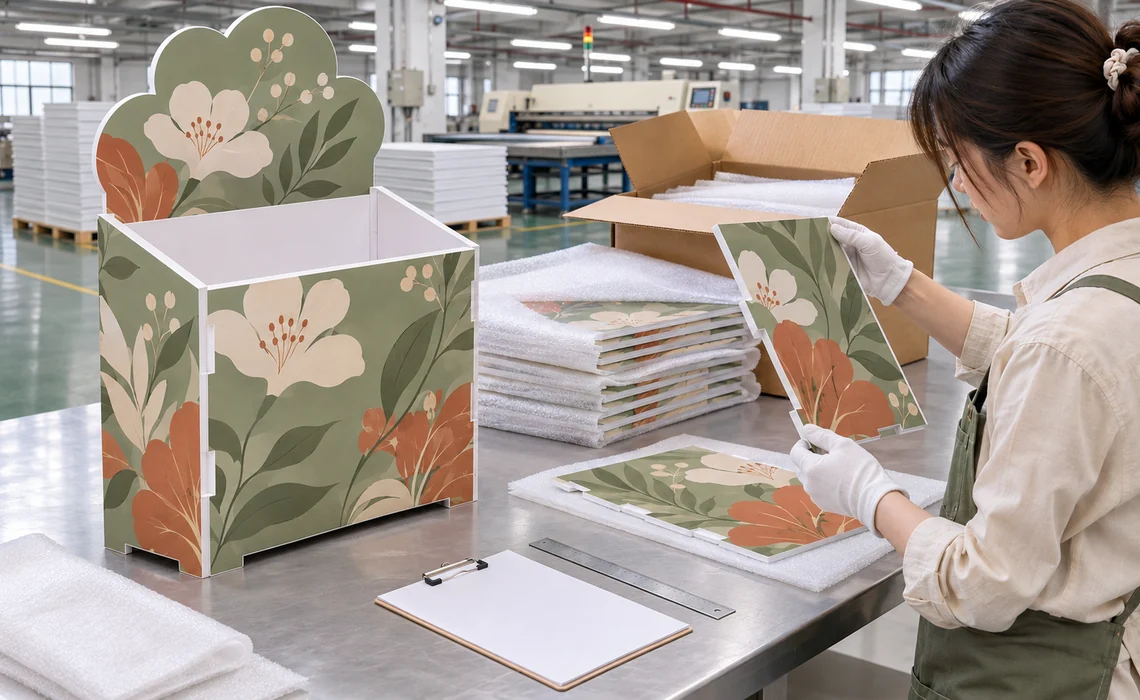
Components, printed panels and specified fittings are checked against the agreed version before packing. A stationery display with several kinds of divider should have a clear component arrangement so the store receives the intended layout. Protective packing is selected for the parts and surface finish. Assembly and shipping details remain part of the project specification, with the store setup method kept concise and practical.

Request a Display Quote

Match the Collection to Each Store

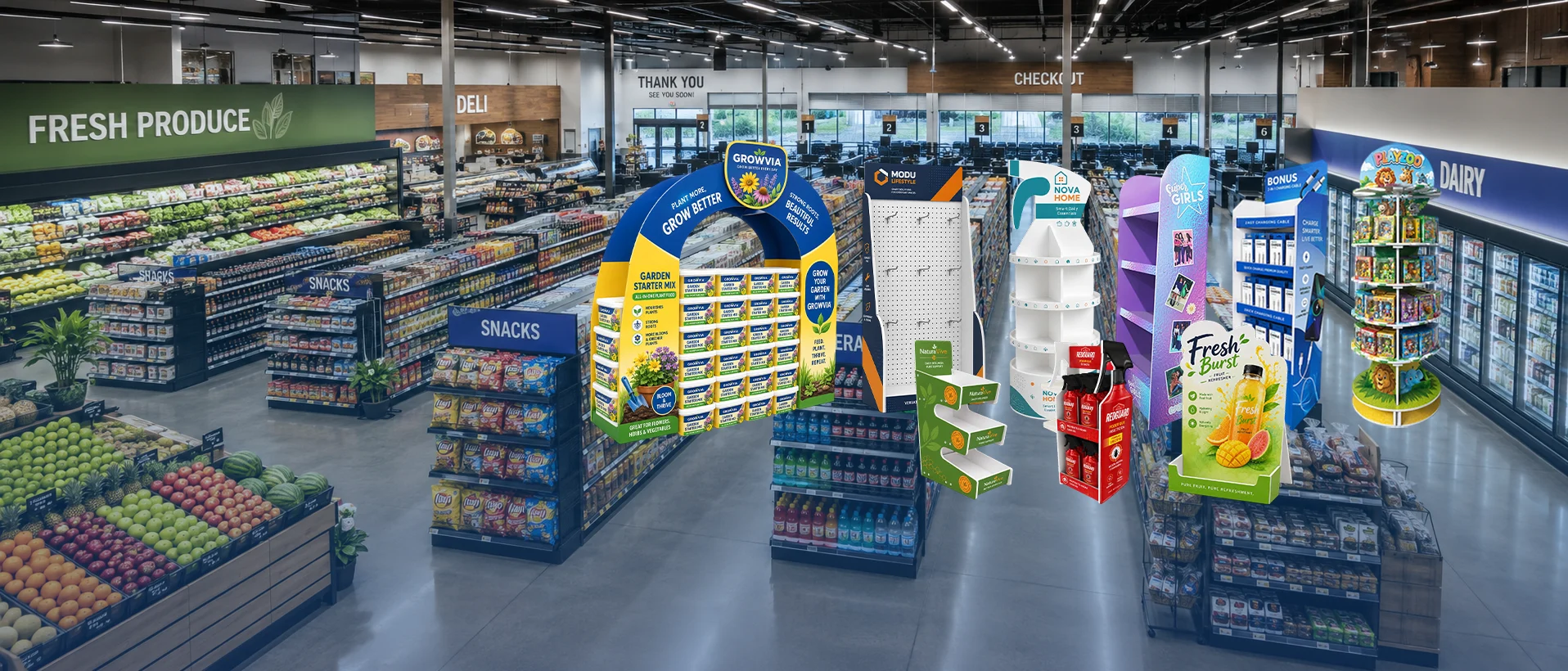
A stationery display in a bookstore may introduce notebooks and writing tools together, while a supermarket promotion may concentrate on a few familiar school essentials. A specialist art shop may need a clearer colour library and more space for individual pens or markers. The fixture should reflect that retail role, including how the shopper approaches the goods and where price information will sit.

Countertop displays offer a useful format for a compact selection, while a dedicated floor unit gives a broader collection its own location. The aim is a recognisable range with a sensible shopping order. Additional structure examples are available in our peg hook displays and shelf display ranges.

Explore Display Formats

Place a Writing Trial Beside the Matching Range

  1. A Defined Demonstration Position

    When a retailer offers a writing trial, the demonstration pen and pad need a deliberate location. Keep that activity clear of the stock openings. A stationery display can leave a small working area that invites the trial while the saleable pens remain organised in their own channels.

  2. An Obvious Return Point

    A trial item should have an identifiable return position near its matching range. That can be a specified holder or a clearly marked place within the demonstration area. The layout should make it easy for customers to leave the sample without dropping it into an unrelated colour or product type.

  3. Simple Daily Upkeep

    The writing area should be easy for store staff to inspect and refresh. A replaceable pad position can help where appropriate. Review the actual contact surfaces and expected use during development so a useful demonstration feature does not become an awkward space that blocks browsing or refilling.

Our Valued Partners

Swipe to explore

Stationery Display FAQs

Answers about arranging writing tools, notebooks and retail sets in a custom stationery display.

Terracotta counter fixture with pencils, packaged refills and notebooks
01Can one display carry loose pens and packaged stationery?

Yes. Compartments can hold loose writing tools while shelves or specified hooks carry packaged products. The useful distinction is how each item is selected and removed. A stationery display should keep those shopping movements separate enough that a hanging pack does not cover a pen compartment or obstruct a notebook shelf.

02How do you keep many pen colours easy to browse?

Use a clear grouping method with consistent positions, then place short colour or range identifiers where they can be read beside the products. Repeated channels can help maintain that order. The number of colours shown at once should suit the available width and the size of each pen rather than a fixed universal layout.

03Can a notebook display include different book sizes?

Yes, when the layout gives each format sufficient support and a clear front-facing position. Taller books can have a separate level or group. The shelf depth and lip are reviewed with the complete books, including any sleeves, bands or retail wrapping that affect how they sit and how they are handled.

04Can a small writing sample area be included?

A defined place for a demonstration pen and writing pad can be considered as part of the layout. It should sit beside the corresponding sale stock and remain easy for staff to maintain. The surface treatment and any replaceable pad holder are discussed for the intended use, rather than assuming that every printed panel is a writing surface.

05Do you supply a sample and what is the bulk minimum?

One sample can be made for review. The bulk MOQ is 100 units, with the design mix and order arrangement confirmed for the project. The sample allows the actual writing tools, notebooks and retail packs to be checked in place. Sample cost and timing are included in the quotation.

06Can the branding change for a later school campaign?

Printed headers or selected information panels can be reviewed for replacement where the construction supports it. A later assortment should still be checked against the original product positions. A new graphic alone will not accommodate a larger notebook, a longer ruler pack or a different hanging arrangement.

07What is needed to begin a stationery fixture project?

A short view of the intended range and retail location is enough to start the discussion. Product samples or packaging details help refine the layout, and brand artwork can follow as the concept develops. We then confirm the scope, quantity, sample arrangement and delivery requirements in the project quotation.

Latest News

Have a Stationery Display Project?

Tell us what you need. We'll help create a custom display solution for your brand.

Request a Quote

Send Your Inquiry Today

Send us a message if you have any questions or request a quote. We will get back to you ASAP!