If you’re planning to order custom PVC display stands for retail stores, supermarkets, or branded promotional campaigns, one of your first questions is likely: How much does a custom PVC display stand cost?
PVC display stand cost varies from project to project because materials, dimensions, structural design, printing, production quantity, and shipping requirements differ.
For example, a small countertop PVC display for skincare products has different manufacturing requirements from a multi-tier floor display designed to hold heavier retail merchandise.
As a manufacturer of custom PVC display stands, we understand that every retail display project has its own requirements. Knowing what affects production costs can help buyers plan budgets, compare quotations, and choose more practical display solutions.

Why Do Custom PVC Display Stand Prices Vary?
Unlike standard off-the-shelf displays, custom PVC display stands are manufactured to meet specific product, branding, and retail presentation requirements.
Even two displays with similar dimensions can have different production costs.
One design might use simple rectangular panels and limited printing, while another might require special shapes, additional internal supports, complex graphics, or multiple assembly components.
The materials and production processes needed for these designs will not necessarily be the same.
An accurate PVC display stand quotation should therefore be based on the actual design and order specifications, not just a reference photo.
1.PVC Material Type, Thickness, and Quality
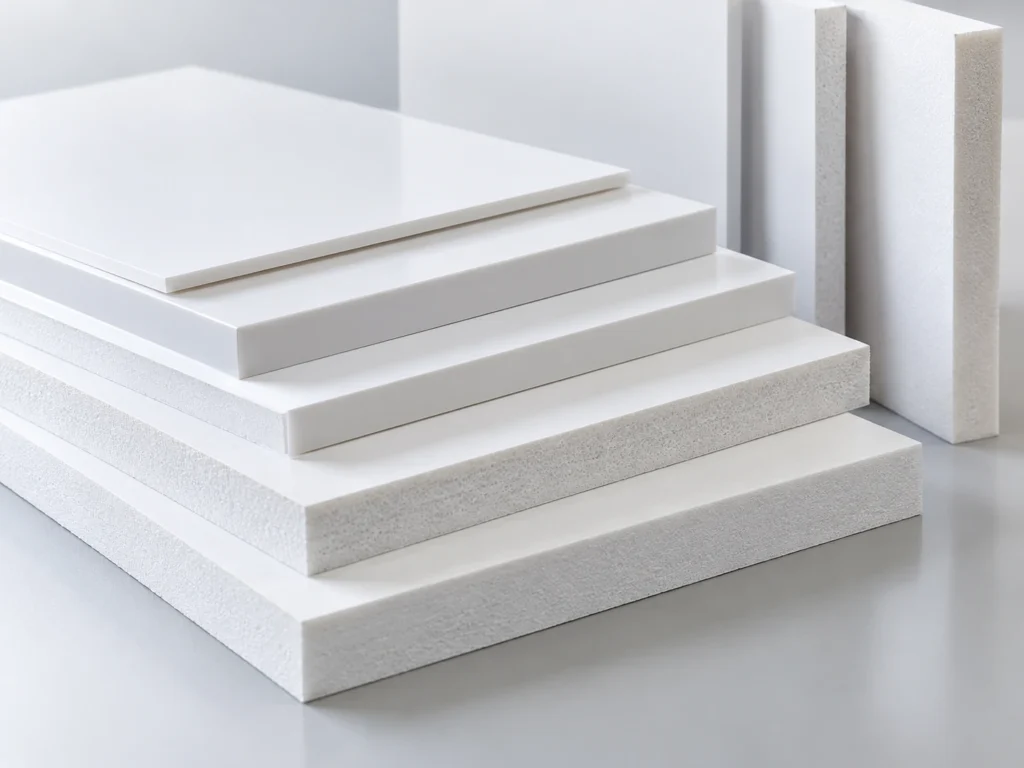
Material selection is one of the most important factors affecting the cost of a custom PVC display stand.
Different types of PVC materials can be used for retail display applications, depending on the required structure, appearance, and functionality.
For example, expanded PVC foam board is commonly used for lightweight display panels, printed promotional structures, and certain retail display applications.
Solid rigid PVC sheets may also be considered for components requiring different material characteristics.
Within these material categories, thickness, density, grade, and surface quality can affect manufacturing costs.
A thicker sheet generally requires more material, but thickness alone does not determine the strength of a finished display.
The complete structure, including panel dimensions, support positions, joints, and load distribution, must also be considered.
Choosing specifications that exceed the project’s requirements can lead to unnecessary material costs.
On the other hand, choosing unsuitable materials simply to reduce the price may affect the display’s functionality.
Buying Tip: Provide your product dimensions, weight, and expected retail environment. This helps the manufacturer recommend a material specification suitable for your actual display requirements.
2.Display Size, Shelf Quantity, and Structural Design
The overall dimensions of a PVC display stand directly affect the amount of material required. Important factors include the display’s height, width, depth, number of shelves, and overall configuration.
A compact countertop display generally has different material and assembly requirements from a full-size floor-standing display. However, dimensions are only part of the calculation. A simple three-tier display and a five-tier display with multiple compartments may have very different structures, even when their outside dimensions are similar.
Additional shelves, dividers, supports, and customized shapes can increase the number of components and manufacturing steps. Product weight is another important consideration. Displays intended for lightweight cosmetics, snacks, or personal care items may have different structural requirements from displays holding heavier merchandise.
The design must account for shelf loading, support positions, and the overall stability of the unit. A well-planned structure helps balance product capacity, retail appearance, and manufacturing efficiency.
Buying Tip: When requesting a quote, include the number of products displayed on each shelf and the approximate weight of each product. This allows the manufacturer to evaluate the structure more accurately.
3. Custom Shapes and Manufacturing Complexity
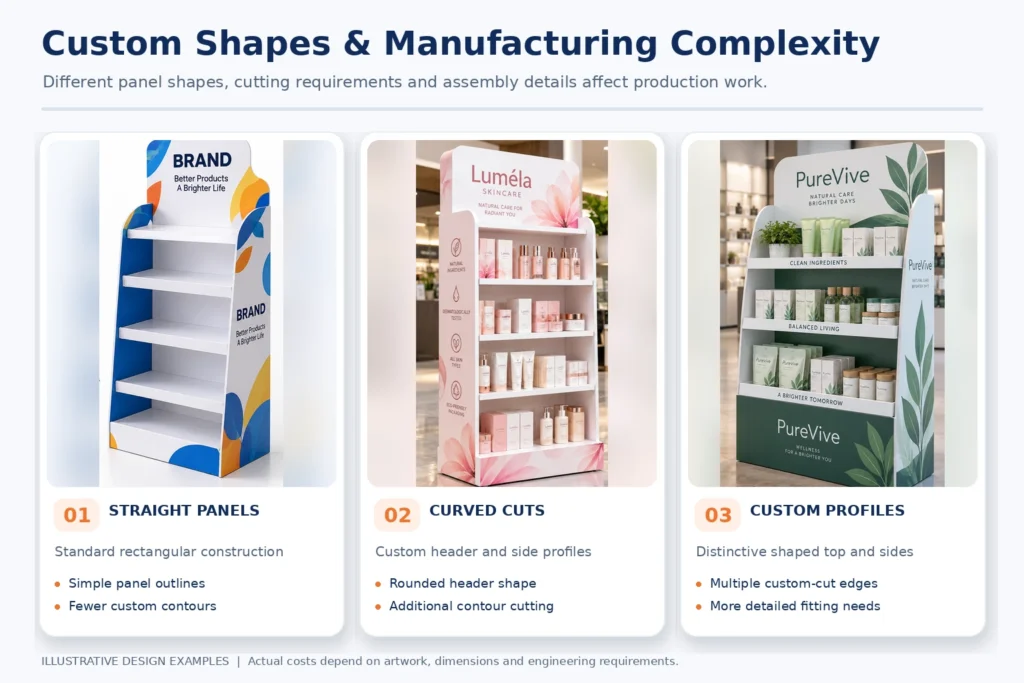
The complexity of a custom PVC display stand can have a significant influence on production costs. Some projects require straightforward panel shapes and relatively simple assembly, while others feature customized headers, curved side panels, product-shaped openings, integrated compartments, hooks, or unusual display configurations.
Depending on the final design, manufacturing may involve cutting, routing, drilling, joining, edge finishing, and assembly. More complicated components can require additional processing time, specialized preparation, and greater attention during production.
Material utilization is also important. PVC panels are typically fabricated from larger sheets. Irregular shapes and inefficient cutting layouts can increase the amount of unused material, which may raise production costs.
For this reason, structural design should consider not only the finished appearance but also manufacturing efficiency. An effective design can maintain the intended retail presentation while reducing unnecessary production complexity.
Buying Tip: If you already have a reference photo or design drawing, share it with the manufacturer. If certain decorative details are flexible, ask whether a simplified alternative could provide a similar appearance at a lower production cost.
4. Printing and Surface Finishing Requirements
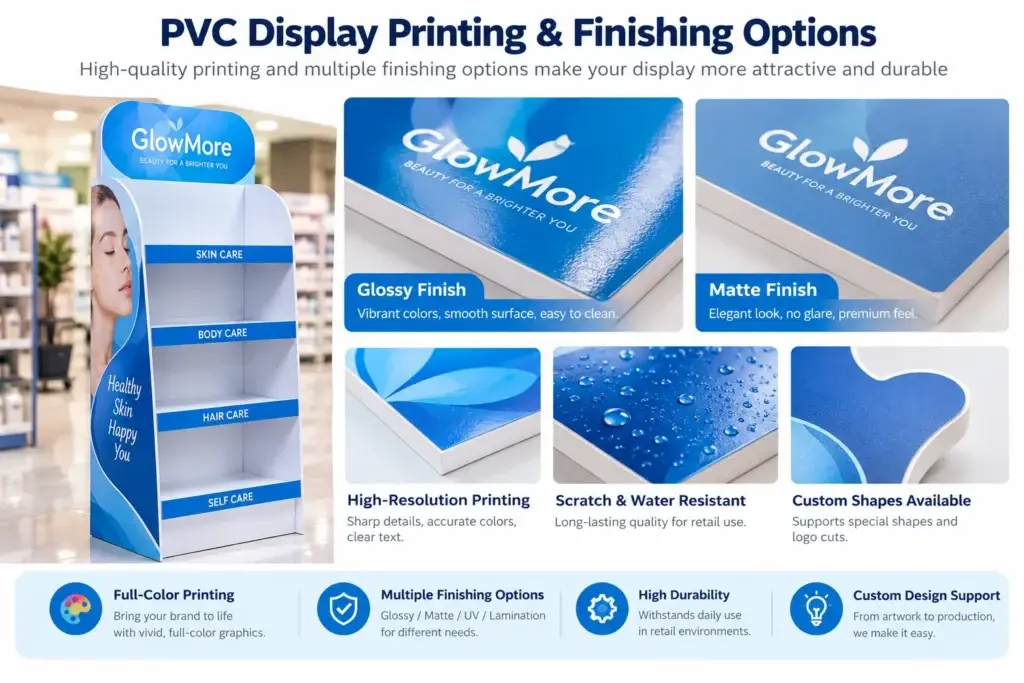
Printing is an important part of many custom PVC retail display projects. Brands often require their display stands to feature logos, promotional graphics, product images, and coordinated colors that match their retail marketing campaigns.
The cost of printing depends on the selected process, printable surface area, graphic requirements, and finishing specifications. Depending on the material and design, suitable options may include direct printing or applying printed graphics to PVC panels.
For example, a display featuring full-color graphics across the header, side panels, shelves, and base may involve different printing requirements from a design with graphics concentrated on a few customer-facing surfaces. Additional finishing requirements can also affect the quotation.
For retail buyers, the goal should be to achieve an effective balance between visual presentation and production cost. A well-designed header can help communicate the brand, while shelf fronts and side panels can carry promotional messages or product information.
Buying Tip: Provide your artwork, logo, or design references when requesting a quotation. You can also ask the manufacturer to evaluate alternative printing layouts based on your budget and branding priorities.
5. Order Quantity and Unit Production Cost
Order quantity is another major factor affecting custom PVC display stand pricing. Custom manufacturing may involve initial preparation costs, such as design development, sample production, artwork confirmation, and production setup.
For smaller orders, these costs are distributed across fewer finished units. For larger orders, some fixed costs can be spread across more displays, potentially reducing the cost per unit. Repeated production of identical components may also improve manufacturing efficiency.
However, the relationship between order quantity and unit price is not always linear. Material costs, production processes, assembly labor, packaging, and scheduling still affect the final quotation.
If you’re planning a retail rollout across multiple stores, requesting prices for different quantities can help you compare purchasing options. For example, you could request quotations for 300, 500, and 1,000 units. These quantities are examples for comparison, not standard minimum order requirements.
Buying Tip: If your final quantity is not confirmed, provide an estimated range. This helps the manufacturer prepare a quotation that matches your purchasing plan.
6. Sampling, Design Development, and Assembly
Some custom PVC display stand projects require additional design and development before mass production. If you already have complete structural drawings, confirmed dimensions, and print-ready artwork, the preparation process may be relatively straightforward.
If you only have a concept or reference image, further design work may be necessary. Depending on the project, the preparation stage can include reviewing product dimensions, developing structural drawings, selecting suitable materials, evaluating the intended load, preparing samples, and confirming the final appearance.
A physical sample can help buyers review the display before mass production. Sampling is particularly useful for complex structures or displays designed to hold specific products. It allows the buyer to check dimensions, product fit, appearance, and assembly requirements before approving a larger order.
The quotation should clarify whether design fees, sample charges, and other preparation costs are included or calculated separately. Assembly requirements also affect production costs. A display consisting of several simple interlocking components may involve different labor requirements from a unit requiring more extensive joining or finishing.
Buying Tip: Confirm whether the quotation includes design development, sampling, and assembly. This can help avoid misunderstandings when comparing suppliers.
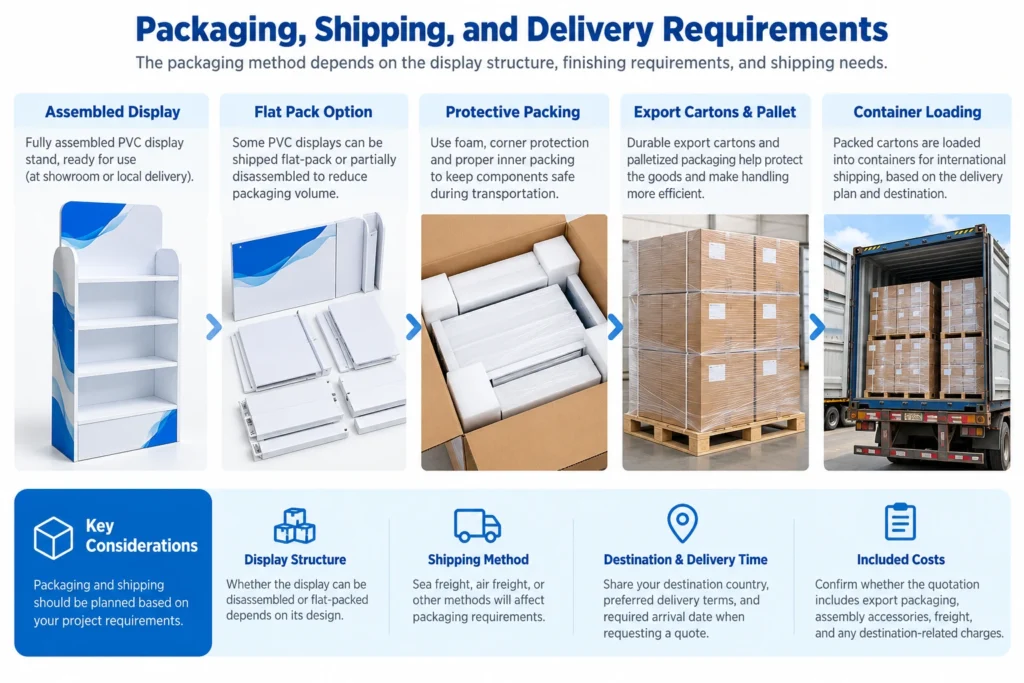
7.Packaging, Shipping, and Delivery Requirements
For international buyers, the factory production price is not necessarily the total cost of the project. Packaging and international transportation can contribute significantly to the final budget.
Shipping costs depend on several factors, including the packed dimensions, shipment weight, volume, destination, and transport method. Large assembled display structures may occupy more shipping space, potentially increasing transportation expenses.
Depending on the design, some PVC display stands may be suitable for flat-pack or partially disassembled shipping. This can help reduce packaging volume in certain projects. However, not every display can be disassembled efficiently or safely. The packing method must match the structure, finishing requirements, and installation process.
Buyers should also clarify whether quotations include export packaging, assembly accessories, freight, or destination-related charges. When comparing different suppliers, it is important to understand exactly which costs are included.
A lower factory unit price does not necessarily result in a lower total delivered cost. Evaluating packaging and logistics together with manufacturing costs can help buyers make more informed purchasing decisions.
For guidance on international delivery responsibilities and cost allocation, buyers can refer to the ICC’s Incoterms® 2020 rules.
Buying Tip: Share your destination country, preferred delivery terms, and required arrival date when requesting a quote. This helps the manufacturer consider packaging and transportation requirements early in the project.
How Can You Reduce the Cost of a Custom PVC Display Stand?
The best way to control custom PVC display stand costs is usually to optimize the design without compromising its required performance. Rather than simply choosing thinner materials or removing structural supports, buyers should consider the complete manufacturing process.
Potential cost-saving approaches include:
- Choose Suitable Materials: Select PVC material specifications based on the display’s actual load requirements and intended use.
- Simplify Complex Shapes: Reduce unnecessary curves, decorative elements, or complicated components that increase processing costs.
- Optimize Material Utilization: Design components to make efficient use of PVC sheets and minimize material waste.
- Improve Printing Efficiency: Focus printed graphics on high-visibility areas while maintaining an attractive branded appearance.
- Standardize Components: Use similar components across different display models whenever practical.
- Plan Order Quantities: Compare production costs at different quantities to identify suitable purchasing options.
- Optimize Packaging: Evaluate flat-pack or partially disassembled designs where appropriate to help reduce shipping volume.
However, cost reduction should never compromise structural stability, product support, or overall display functionality.
For example, a lightweight countertop display and a multi-tier floor display may require very different materials and support structures.
The goal is to achieve the right balance between manufacturing cost, visual appearance, durability, and practical retail performance.
If you’re still exploring suitable display options, you can also read our guide on How to Choose the Right PVC Display Stand for Retail Stores.
What Information Do You Need for an Accurate PVC Display Stand Quote?
Providing complete project information helps manufacturers calculate PVC display stand cost more accurately and makes the quotation process faster.
Before contacting a PVC display stand manufacturer, prepare the following details whenever possible:
1. Product Information
What type of products will the display hold? Provide product dimensions and approximate weight.
2. Display Dimensions
Share your preferred height, width, and depth. A reference image is also useful.
3. Display Configuration
Specify the number of shelves, hooks, compartments, or other required features.
4. Branding Requirements
Provide your logo, artwork files, or visual references. Let the manufacturer know which surfaces need printing.
5. Estimated Order Quantity
Provide your expected quantity or a purchasing range.
6. Packaging Preferences
Explain whether you prefer an assembled display or a design that can be packed more compactly.
7. Delivery Information
Include your destination country, preferred shipping arrangement, and required delivery date.
You do not necessarily need completed engineering drawings before making your first inquiry. Product photos, approximate dimensions, and a clear description of your display requirements can provide a useful starting point.
Frequently Asked Questions About Custom PVC Display Stand Costs
1. How much does a custom PVC display stand cost per unit?
The unit price depends on the material type, display dimensions, structural design, printing requirements, and order quantity. Since each display is customized, an accurate quotation requires specific project details. Contacting the manufacturer with your requirements is the best way to receive a reliable price estimate.
2. Does a larger order quantity reduce the unit price?
Larger orders can help reduce certain production costs per unit because design preparation, machine setup, and other fixed costs can be distributed across more displays. However, the actual savings depend on the materials, design complexity, and manufacturing process.
3. Is PVC foam board suitable for retail display stands?
Yes, PVC foam board is commonly used for retail displays, promotional stands, and branded merchandising fixtures. It is lightweight, printable, and suitable for various customized structures. The appropriate board thickness and structural design should be selected according to the intended product weight and display requirements.
4. Can PVC display stands be customized with brand logos and graphics?
Yes. Custom PVC display stands can incorporate brand logos, promotional graphics, product images, and different display shapes. Printing methods and finishing options depend on the selected material, design specifications, and production requirements.
5. Can custom PVC display stands be shipped flat-packed?
Some PVC display stands can be designed for flat-pack or partially disassembled shipping, which may help reduce packaging volume and transportation costs. However, feasibility depends on the display structure, assembly method, and product requirements.
6. What information should I provide to get an accurate quotation?
To receive an accurate quotation, provide your preferred display dimensions, product weight, estimated order quantity, design references, printing requirements, and destination country. If you do not have technical drawings, reference photos and basic product information can help the manufacturer begin evaluating your project.
Conclusion: Focus on Total Value, Not Just Unit Price
When evaluating PVC display stand cost, buyers should consider more than the lowest quoted unit price.Material specifications, structural performance, printing quality, manufacturing efficiency, and shipping arrangements all contribute to the overall project cost.
Understanding these factors helps buyers compare quotations more effectively and choose a display solution that balances cost, appearance, durability, and functionality.
With extensive experience in custom retail displays, we understand the importance of matching each PVC display design to the customer’s product and retail requirements.
Request a Custom PVC Display Stand Quote
Planning a custom PVC display stand for your retail products or upcoming promotional campaign?
We provide custom PVC display manufacturing solutions through our production partners, with support for structural design, material selection, branding, quality control and order coordination.
Send us your product photos, preferred display dimensions, estimated quantity, and delivery destination. Our team can review your requirements and prepare a quotation based on your project specifications.